Hanoi University of Science and Technology (HUST)https://www.hust.edu.vn/uploads/sys/logo-website02_136_200_1.png
Wednesday - 05/11/2025 03:46
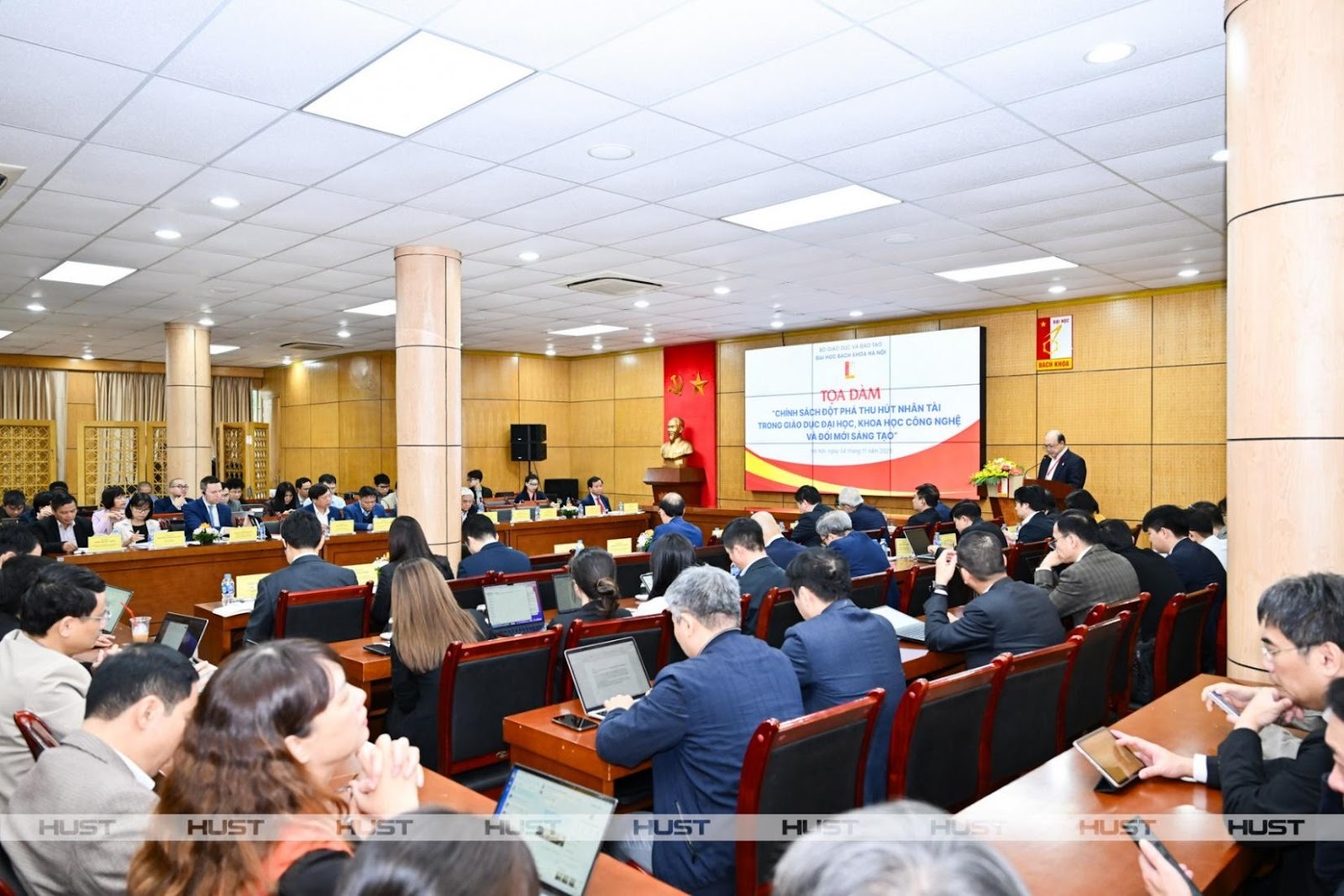
This morning (November 4), Hanoi University of Science and Technology (HUST) hosted the seminar "Breakthrough Policies for Attracting Talent in Higher Education, Science-Technology, and Innovation." The seminar was held amidst the eager atmosphere of scientists, education experts, researchers, and managers from both Vietnam and abroad. Together, they discussed a topic of great significance for the country's development: How to attract, retain, and enable talent to reach their full potential right here in Vietnam?
A Panoramic View of the Nation's Talent Attraction Strategy
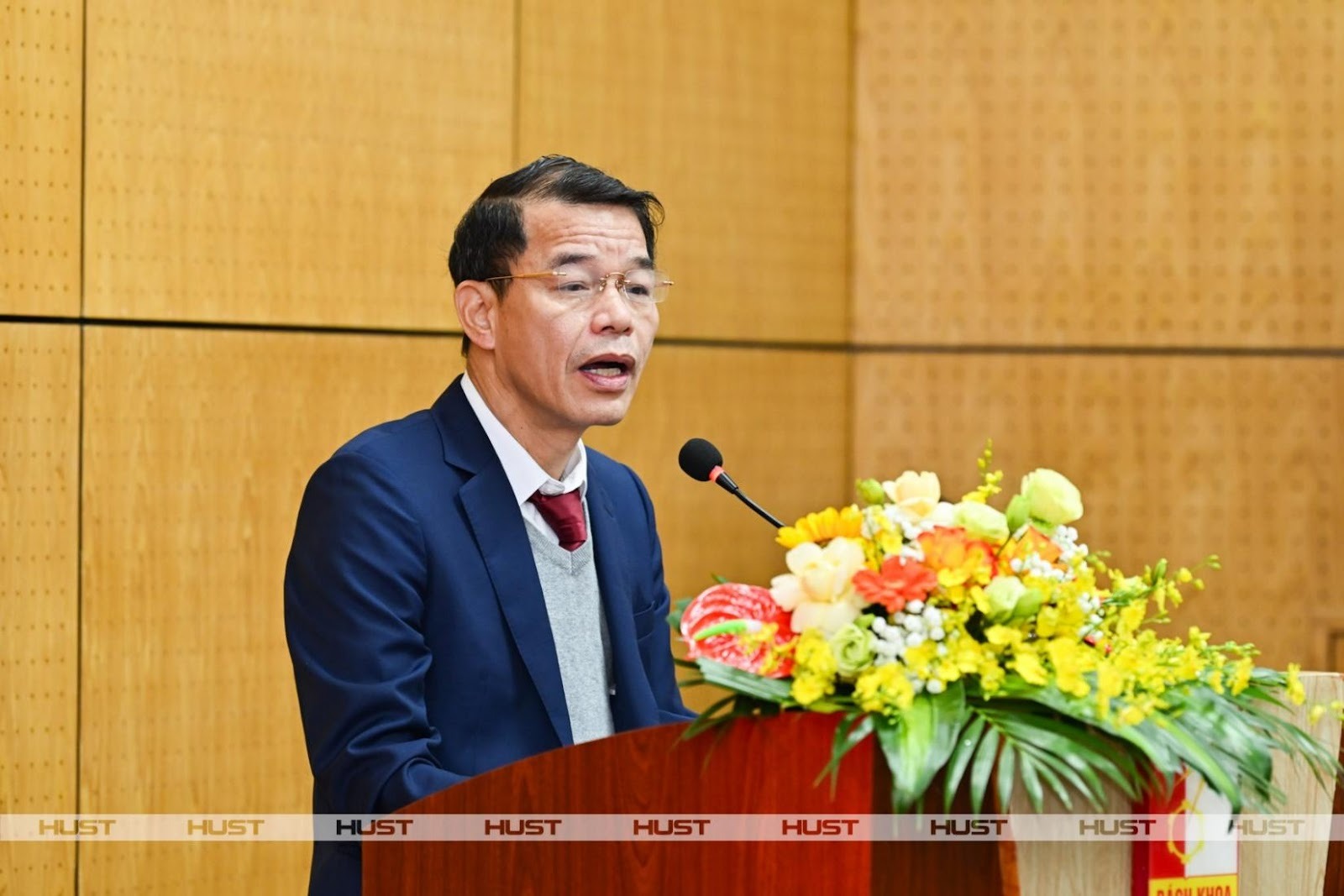
In his opening remarks, Assoc. Prof. Huynh Quyet Thang – President of Hanoi University of Science and Technology – emphasized that this event was not merely a discussion but a concrete step in realizing the Politburo's Resolution 71-NQ/TW—a landmark resolution for breakthroughs in education and training development. The spirit of the Resolution clearly identifies: Higher education is the core for developing high-level human resources and promoting science, technology, and innovation.
Assoc. Prof. Huynh Quyet Thang - President of HUST - delivers the opening speech at the seminar.
To realize this spirit, Hanoi University of Science and Technology has launched the HUST-Talent Scheme (2025 - 2030)—an ambitious program to attract young PhDs, experts, and leading scientists from both Vietnam and abroad.
HUST organized this morning's seminar to align policy will with academic aspiration, creating a forum for management levels, educational institutions, international organizations, and businesses to share new approaches to talent policy.
Dr. Vu Thanh Mai – Deputy Head of the Central Propaganda and Mass Mobilization Commission – expressed his hope that the seminar would discuss and exchange ideas to resolve key groups of issues:
1. Continue researching and deeply grasping the spirit of Resolution 71 to spread new awareness about the position and role of talent in developing higher education, science-technology, and innovation.
2. Talent attraction is not just about remuneration but about comprehensive human development policies linked to national development, driven by the aspiration to build a powerful and prosperous Vietnam by 2045.
3. Build outstanding policies and mechanisms to attract and utilize talent in higher education institutions and research institutes.
4. Develop young talent resources as a long-term strategy.
5. Innovate talent utilization and remuneration policies towards substance, competitiveness, and fairness.
6. Strengthen international cooperation and knowledge integration.
Dr. Vu Thanh Mai - Deputy Head of the Central Propaganda and Training Commission - speaks at the seminar.
The first part of the seminar featured presentations that acted as pieces of a puzzle, offering different perspectives to create a panoramic view of the country's talent attraction strategy.
Recent Important Party Resolutions Create the Foundation for Talent Policy
According to Dr. Le Thi Mai Hoa – Deputy Head of the Education Department, Central Propaganda and Training Commission – many recent important Party resolutions have created the foundation for talent policy. Notable examples include Resolution 45-NQ/TW in 2023 on promoting the role of intellectuals, Resolution 57-NQ/TW in 2024 on developing science, technology, and innovation, and Resolution 71-NQ/TW in 2025 on breakthroughs in education and training development.
She stated that Resolution 71 clearly identifies higher education as the core for developing high-level human resources and talent. Simultaneously, it proposes specific mechanisms to mobilize capable individuals for teaching and research, and to build policies for attracting excellent lecturers from home and abroad, aiming to form a contingent of educators and scientists with high quality, capacity, and qualifications.
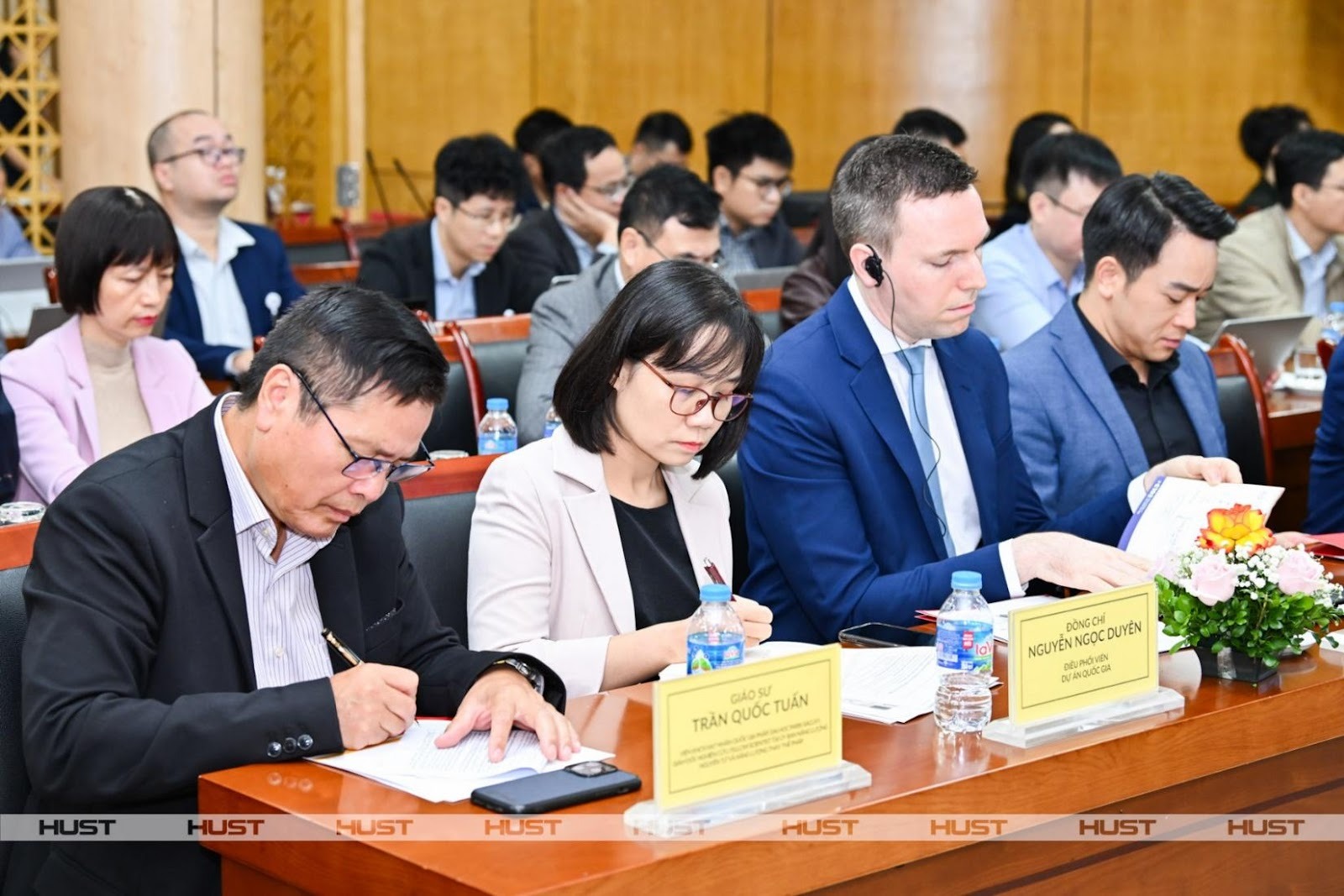
Second and third from right: Mr. Felix Weidenkaff - Officer-in-Charge of the ILO Office in Vietnam, and Ms. Nguyen Ngoc Duyen, National Project Coordinator, ILO Office in Vietnam - at the seminar.
International Experience in Attracting and Retaining Talent
Continuing the program, Mr. Felix Weidenkaff – Officer-in-Charge of the ILO Office in Vietnam – and Ms. Nguyen Ngoc Duyen, National Project Coordinator, ILO Office in Vietnam, presented on the topic "International Experience in Attracting and Retaining Talent."
According to the ILO report, the world is witnessing fierce competition for high-quality human resources, heavily impacted by digitalization and the green transition. Countries successful in attracting talent rely on the principle of "decent work"—meaning jobs that provide fair income, a safe environment, lifelong learning opportunities, and career development.
Mr. Felix noted that decent work not only helps retain talent but also contributes to limiting brain drain and promoting long-term commitment between employees and organizations.
Ms. Nguyen Ngoc Duyen emphasized that Vietnam possesses a young workforce, especially in STEM fields, but the proportion of highly skilled labor remains low. To achieve the goal of becoming a high-income country by 2045, strong investment is needed in skills development, creating transparent working environments, and encouraging gender equality in science and technology.
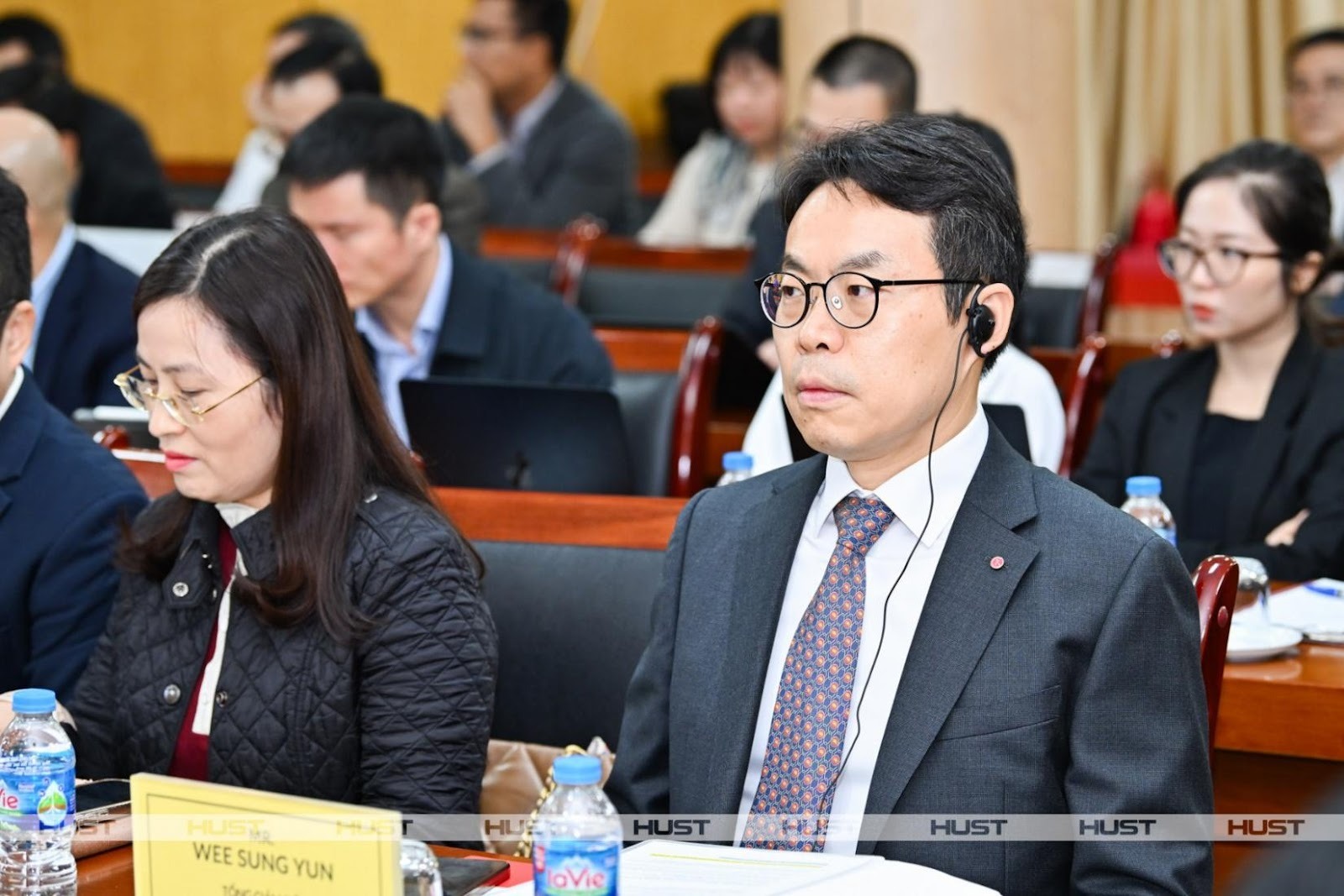
Mr. Wee Sung Yun - General Director of LG Electronics R&D Vietnam - at the seminar.
Presenting at the seminar, Mr. Wee Sung Yun – General Director of LG Electronics R&D Vietnam – recounted LG's journey from 2016 with a few dozen engineers to now having over 1,200 personnel in Vietnam. He stated: "For us, people are the nucleus of innovation."
The three pillars LG is pursuing are: an Innovation Environment, Capacity Development, and Cooperation with Universities. LG R&D Vietnam currently collaborates with HUST on numerous academic activities, from sponsoring labs and scholarships to organizing internship programs—the initial "bridges" between the lecture hall and the market.
The Role of Universities in Attracting Talent
Prof. Vu Van Yem - Vice President of HUST - presents at the seminar.
Notably, Prof. Vu Van Yem – Vice President of Hanoi University of Science and Technology – brought the story of talent attraction back to the vivid reality of Vietnamese higher education institutions themselves.
Prof. Yememphasized that in the era of the knowledge economy and digital transformation, the university is the "cradle" producing knowledge and the "heart" of the human resource training system. Therefore, it must have a team of talented lecturers and scientists to create new knowledge and lead innovation. Without attracting talent, universities will struggle to innovate curricula, elevate research, and integrate internationally.
According to Prof. Yem, attracting talent is a prerequisite for universities to successfully implement autonomy, integration, and sustainable development. He cited evidence: Hanoi University of Science and Technology deployed the "Scheme for Attracting Excellent Lecturers for the 2021–2025 Period" and is now continuing with HUST-Talent (2025–2030)—a program expanding the recruitment scope to talented young PhDs, experts, and leading scientists.
Panoramic view of the seminar.
The Scheme targets three main groups:
1. Talented young PhDs graduating from top educational institutions worldwide.
2. Professors, Associate Professors, and technology experts from businesses and research institutes.
3. Prestigious scientists and managers from Vietnam and abroad.
The Scheme's policies include salaries ranging from 40 to 150 million VND/month, housing support, HustCare health insurance, research funding, support for international project registration, and a clear career development roadmap commitment. Hanoi University of Science and Technology expects this scheme to form a strong scientific workforce, contributing to improving the quality of teaching, research, and innovation.
Proposed Solutions to Remove 4 Major Bottlenecks in Talent Attraction Practice
Assoc. Prof. Tran Quoc Cuong - Member of the Party Central Committee, Former Secretary of the Dien Bien Provincial Party Committee, HUST Mathematics alumnus - contributes opinions at the seminar.
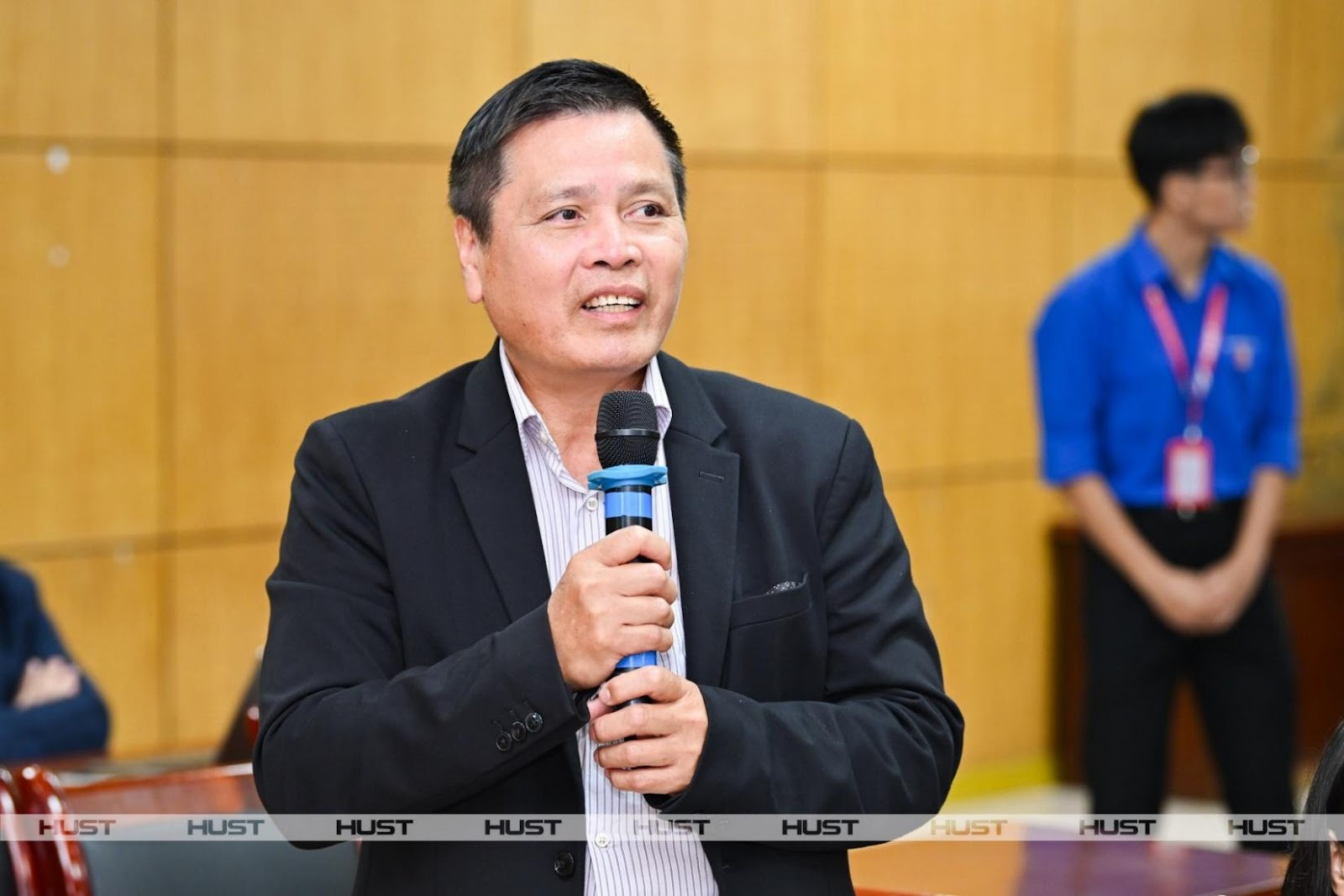
Prof. Tran Quoc Tuan - French National Institute for Nuclear Science and Technology, University of Paris-Saclay; Research Director, Fellow Scientist at the French Alternative Energies and Atomic Energy Commission - speaks at the seminar.
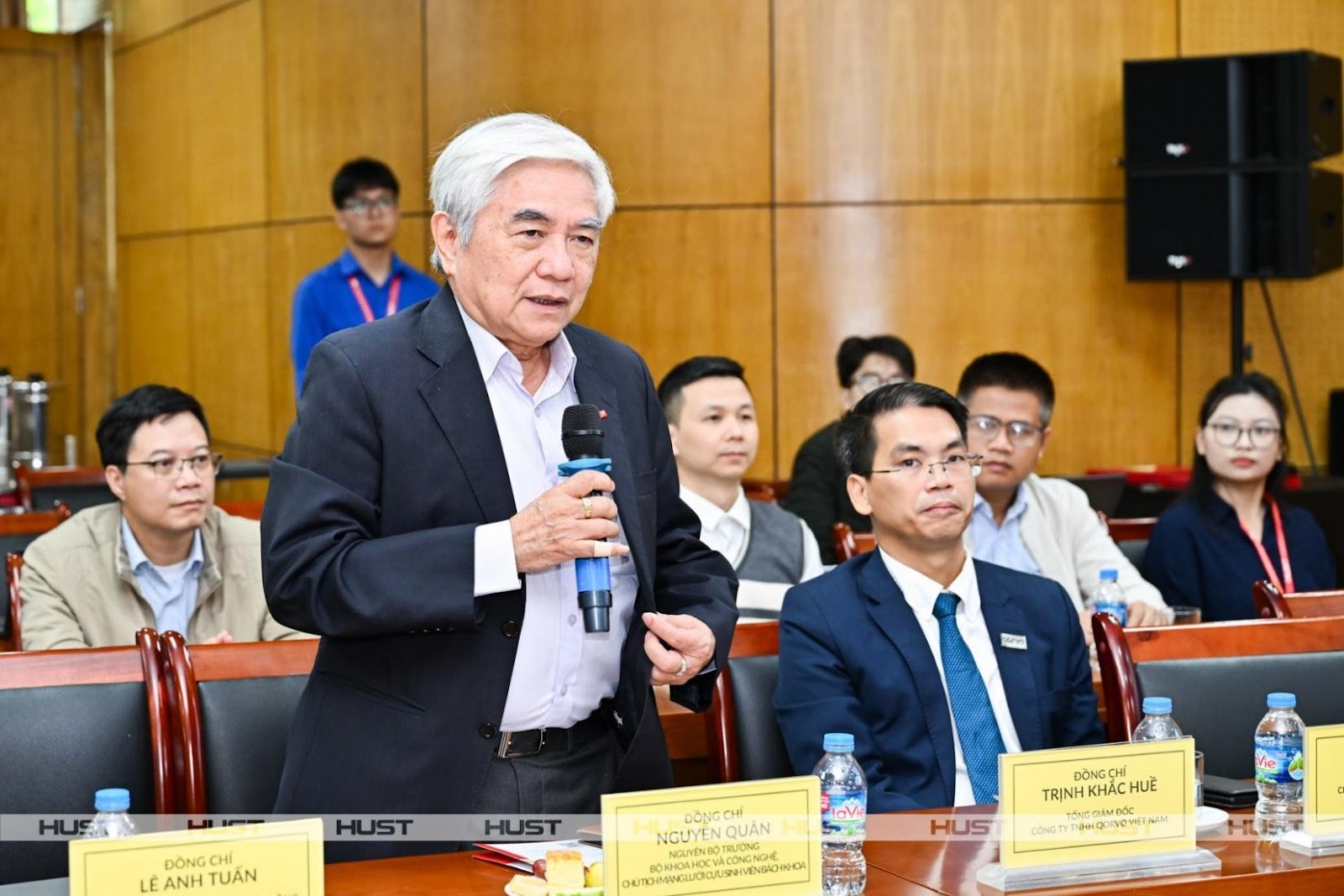
Dr. Nguyen Quan - Former Minister of Science and Technology, Chairman of the HUST Alumni Network - speaks at the seminar.
At the seminar, the discussion session—featuring representatives from the Central Propaganda and Training Commission, the Ministry of Education and Training, the Ministry of Science and Technology, the Ministry of Foreign Affairs, university leaders, experts, scientists, lecturers, and businesses—saw speakers and delegates exchange ideas on various contents. A highlight was identifying four major bottlenecks in the practice of employing talent:
1. Incomplete autonomy mechanisms.
2. Financial and remuneration policies are not competitive enough.
3. The academic and research environment is not yet truly open.
4. Lack of linkage between universities/research institutes and businesses.
Additionally, delegates proposed several policies and solutions to remove these bottlenecks and promote talent attraction and development in higher education, science, technology, and innovation.
Specifically:
For the Government and Ministries:
* Develop specific financial mechanisms and grant autonomy to key national universities to implement policies for attracting and retaining talent, and appointing professors and associate professors.
* Promulgate and guide policies on tuition waivers and scholarships for master's and doctoral students.
* Issue preferential tax, income, and residency policies for international experts, scientists, and lecturers working at public higher education institutions.
* Support, guide, or create breakthroughs in Public-Private Partnerships (PPP) for higher education institutions to develop human resources, facilities, infrastructure, and science and technology.
* Increase investment in facilities, laboratories, and research infrastructure commensurate with the requirements of research-oriented and innovation-oriented higher education institutions.
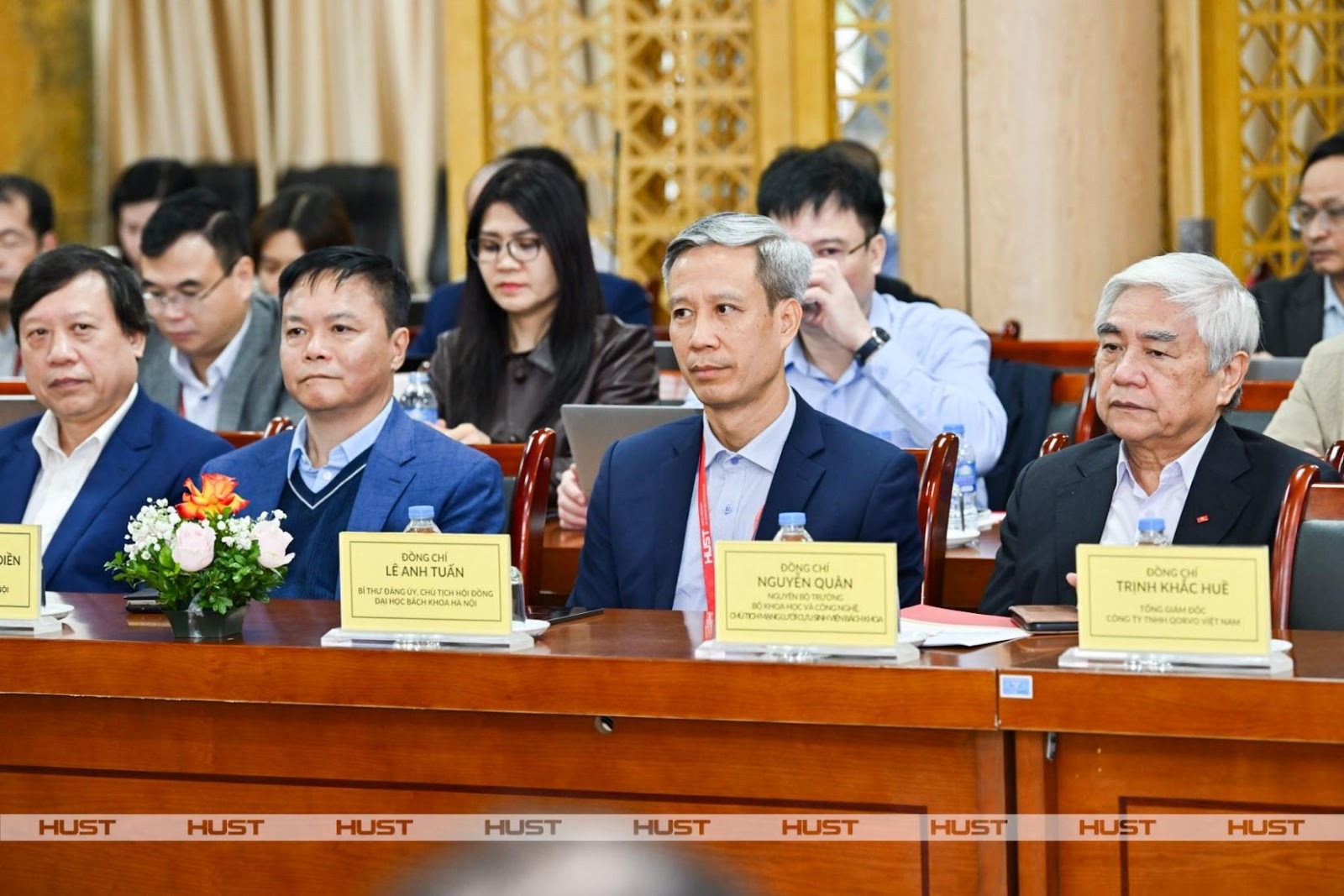
From left: Assoc. Prof. Bui Duc Hung - Chairman of HUST Trade Union, Assoc. Prof. Nguyen Phong Dien - Vice President of HUST, Prof. Le Anh Tuan - Secretary of the Party Committee, Chairman of HUST Council, Dr. Nguyen Quan - Former Minister of Science and Technology, Chairman of HUST Alumni Network - attended the seminar.
For Businesses and Partners:
* Co-invest and co-sponsor under the Public-Private Partnership (PPP) model to develop infrastructure, science, technology, and innovation.
* Sponsor scholarships, research support funds, and venture capital funds to develop talent within universities.
* Strengthen tripartite cooperation (State - University - Business) in training and utilizing talent.
For Higher Education Institutions:
* Build and implement mechanisms for sharing laboratories, lecturers, scientists, and leading experts, especially in key fields (AI, semiconductors, blockchain, cybersecurity, energy, materials technology, digital economy, etc.).
* Form a "Vietnam University Talent Network," creating conditions for lecturers and scientists to participate in inter-university teaching and research.
Common Goal: Optimize resources, avoid dispersion, and simultaneously improve the overall academic quality of the system.
HUST and the Start of Concrete Actions to Attract Talent
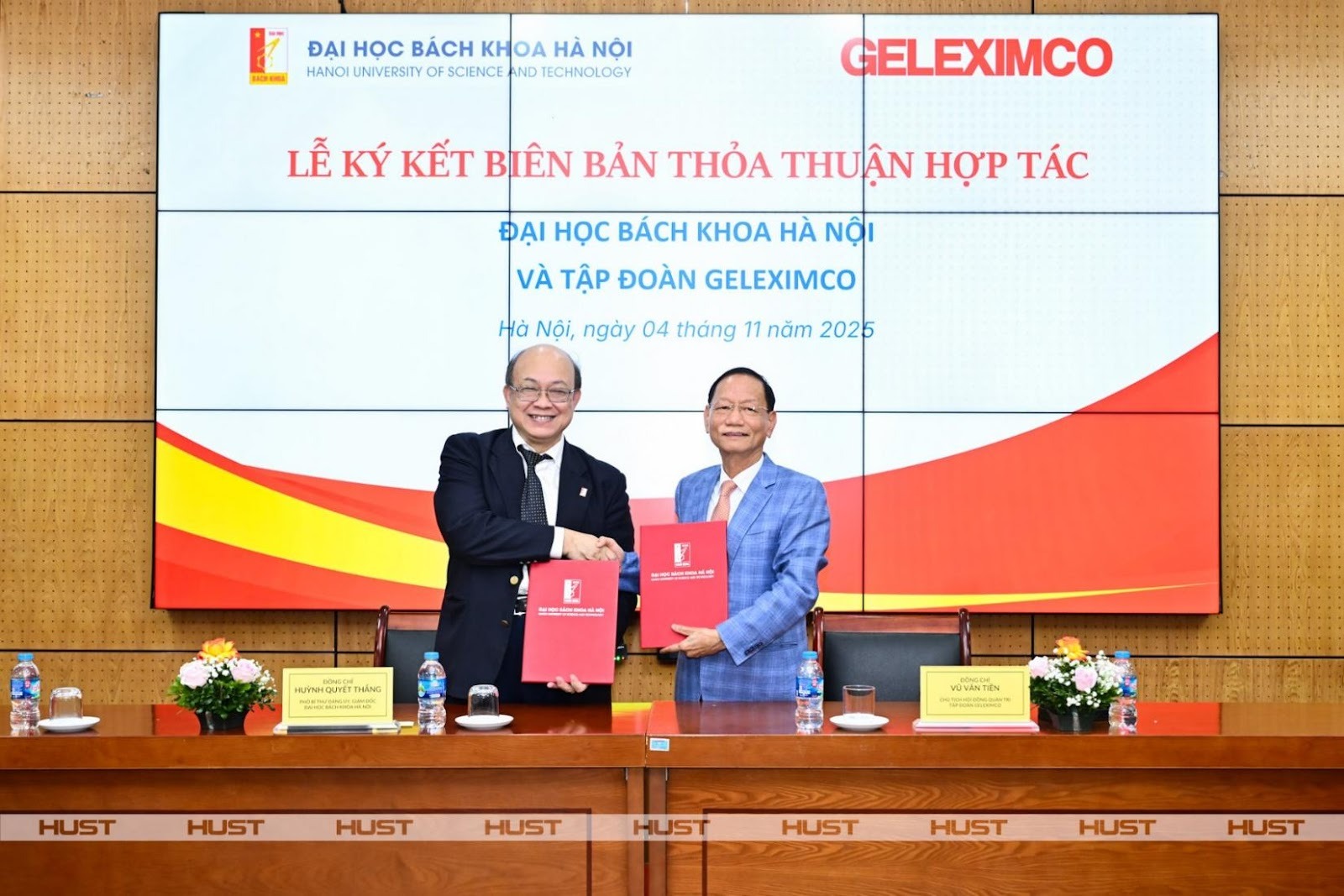
Assoc. Prof. Huynh Quyet Thang - President of HUST and Mr. Vu Van Tien - Chairman of Geleximco Group - exchange Cooperation Agreements.
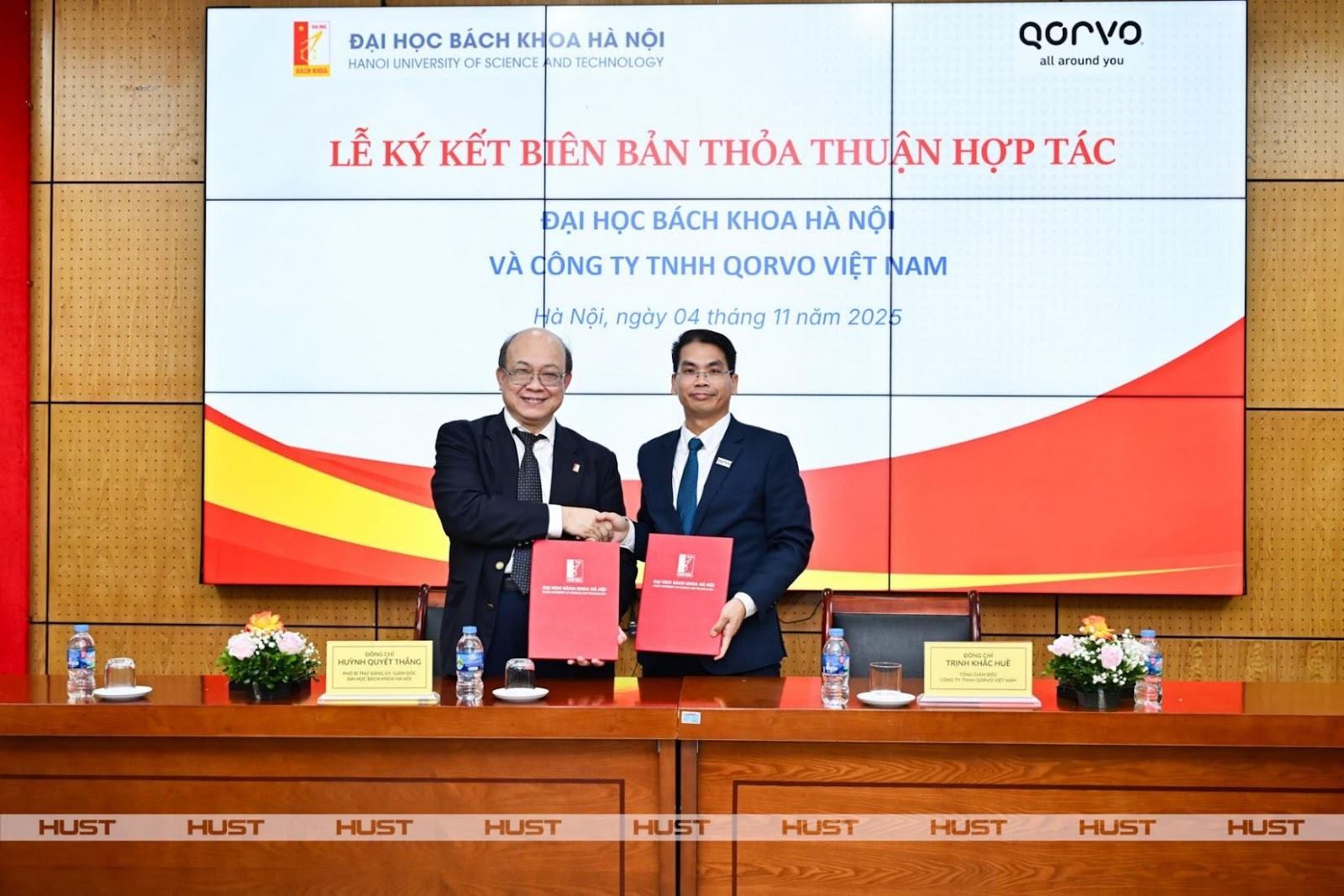
Assoc. Prof. Huynh Quyet Thang - President of HUST and Mr. Trinh Khac Hue - General Director of Qorvo Vietnam - exchange Cooperation Agreements.
At this morning's seminar, exchanges and discussions did not stop at ideas. Delegates witnessed the start of concrete actions to attract talent. This was the signing ceremony of cooperation agreements between Hanoi University of Science and Technology with Qorvo Vietnam Company and Geleximco Group. Specifically:
* With Qorvo Vietnam: The two sides agreed to implement training programs on electronic circuit design, semiconductor technology, wireless communication, and IoT; simultaneously supporting students with practice, internships, and scholarships.
* With Geleximco - A strategic agreement: Establishing the Geleximco - HUST High-Tech Research and Training Center and the Geleximco - HUST Innovation Fund.
These signings represent both financial commitments and an affirmation of businesses' trust in Hanoi University of Science and Technology specifically, and Vietnamese universities in general.
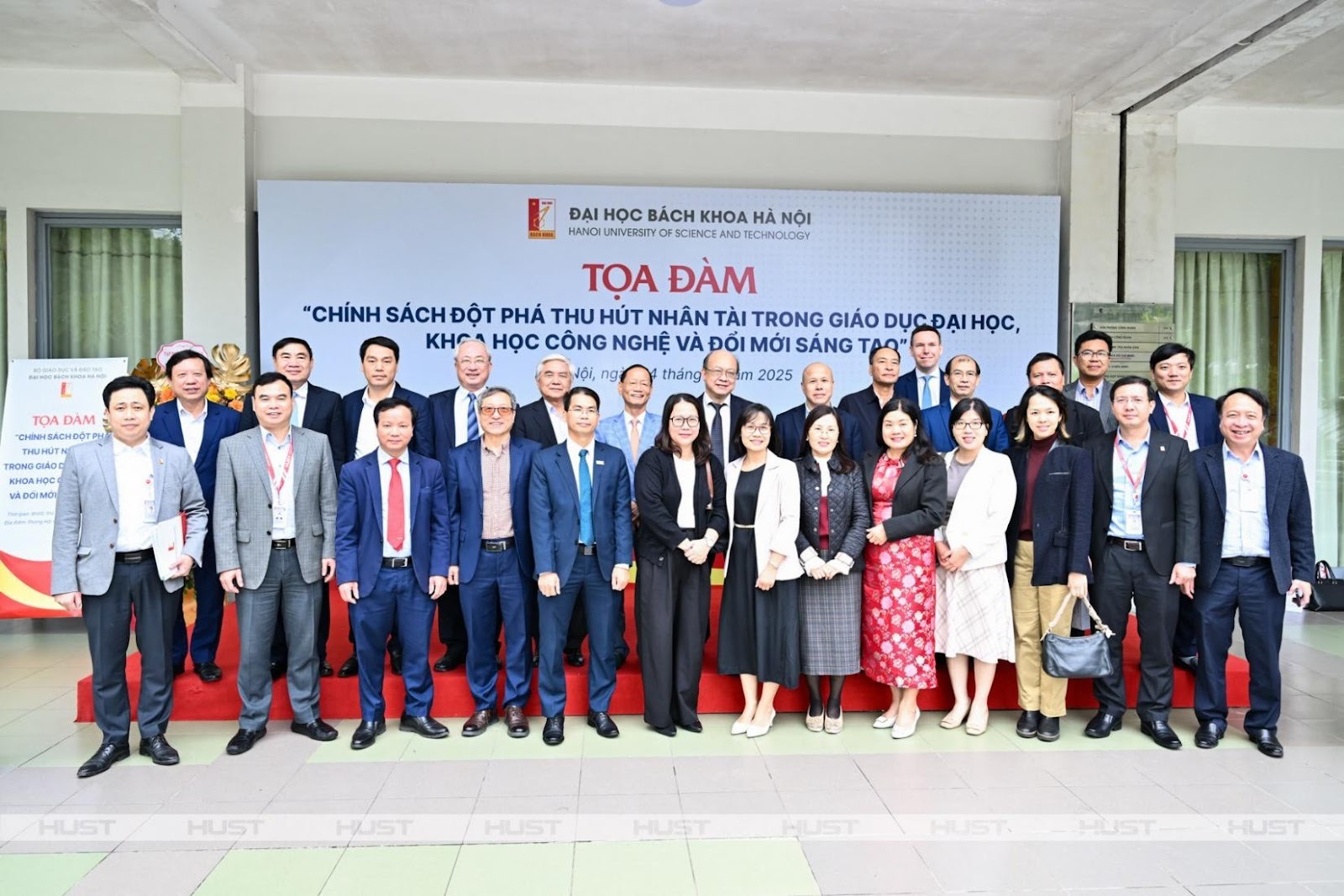
Organizers and delegates take a commemorative photo at the seminar.
What made this morning's seminar special was the profound academic content and the logical progression from dialogue to action. The concrete commitments between HUST-Geleximco and HUST-Qorvo today serve as a microcosm of the University-Business-State model, co-creating an innovation ecosystem, where every talent is viewed as a nucleus for the nation's sustainable development.
ATTRACTING AND UTILIZING TALENT IS NOT JUST ABOUT REMUNERATION!
Experts and managers at the Seminar unanimously agreed: "Talent is the nation's most valuable asset. Developing talent is not just an investment in people but an investment in the country's future. Attracting and utilizing talent in higher education, science, technology, and innovation is not just a story of remuneration, but of creating an academic, creative, and dedicated ecosystem—where talented people are empowered, challenged, and enabled to unleash their capabilities for the development of the country."



 Behind the AI Algorithms Optimizing Life-Saving Irradiation...
 A 30-Country Arena, a HUSTer, and the Story of Classrooms...
 The “Family Tradition” of HUST
 AI DAY 2026: Hanoi University of Science and Technology...
 Hanoi University of Science and Technology and The Asia...
 Entrepreneurship for Healing
 HUST Research Applies Artificial Intelligence to Medical...
 From the Lecture Hall to HiCamping: Study Hard, Live Fully...
 Hanoi University of Science and Technology Strives to...
 Tripartite Cooperation Integrating Training, Research, and...