Hanoi University of Science and Technology (HUST)https://www.hust.edu.vn/uploads/sys/logo-website02_136_200_1.png
Sunday - 12/04/2026 23:27
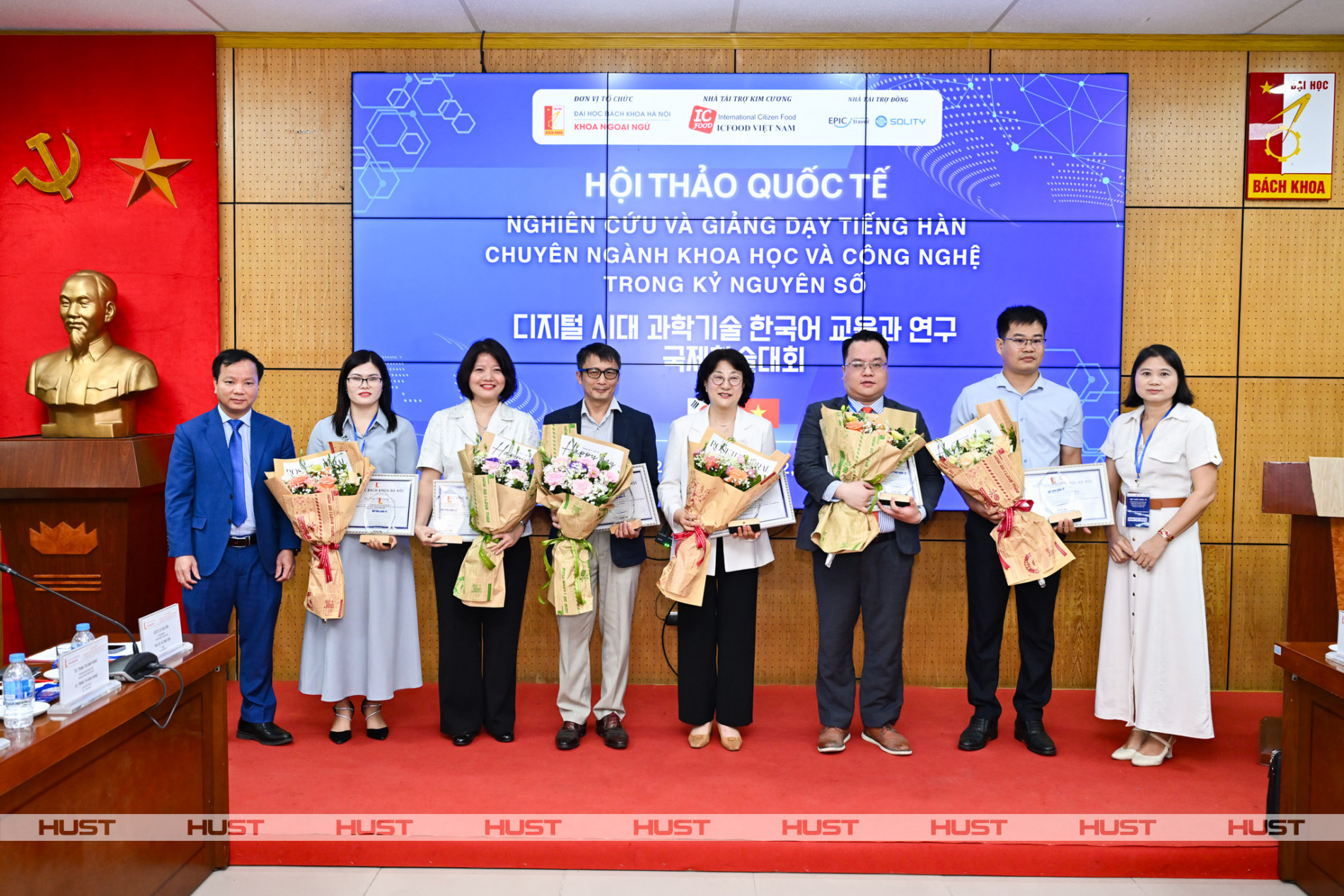
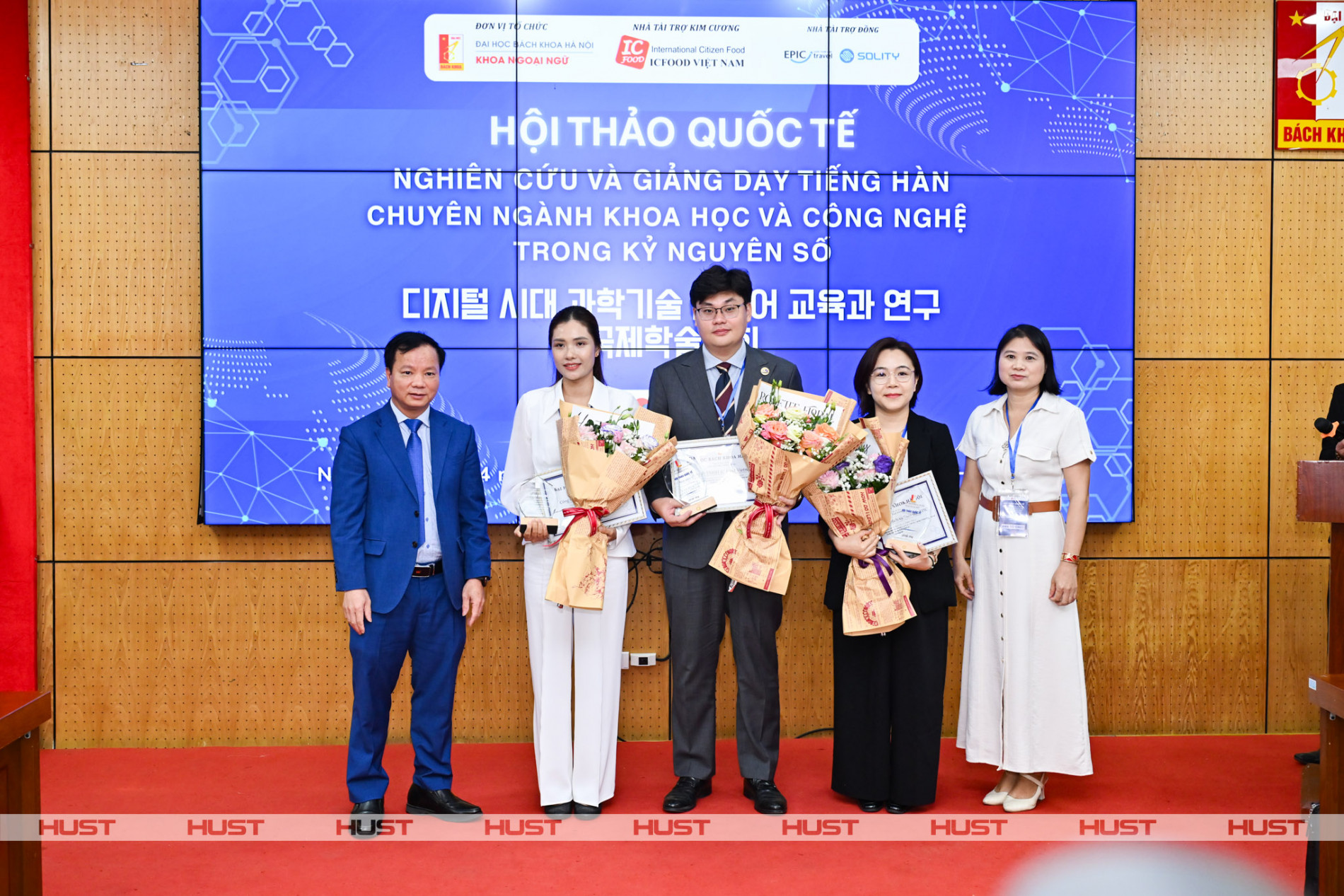
Prof. Vu Van Yem (far left) - Vice President of HUST and Dr. Trinh Thi Anh Hang - Dean of the School of Foreign Languages, HUST, present flowers and commemorative medals to speakers attending the Conference.
This morning (April 10), at the International Conference "Research and Teaching of Korean for Science and Technology in the Digital Era" held at Hanoi University of Science and Technology (HUST), Master Nguyen My Binh - Director of the English for Science and Technology (FL1) Program, School of Foreign Languages - shared a quote she highly appreciates from Assoc. Prof. Nguyen Viet Khoa - former leader of the School - with the delegates: "A mountain range cannot have just one or two peaks, but if we talk about the peak of science and technology training in Vietnam, it must be HUST!".
The quote reflects the pride of a HUST person and also serves as a convincing answer as to why a completely new and challenging major like Korean for Science and Technology (FL4) was born at this very university.
At the Conference, Dr. Tran Thi Huong - Dean of the Faculty of Korean Language and Culture, University of Languages and International Studies (VNU) used the phrase "hot major" to congratulate HUST for its sensitivity to the pulse of the times. The birth of FL4 is the solution to the problem of a high-tech human resource shortage with an understanding of the Korean language, a task full of difficulties but one that HUST is determined to implement with all its inner strength.
The First Bricks of the FL4 Major Built from HUST's Knowledge Foundation
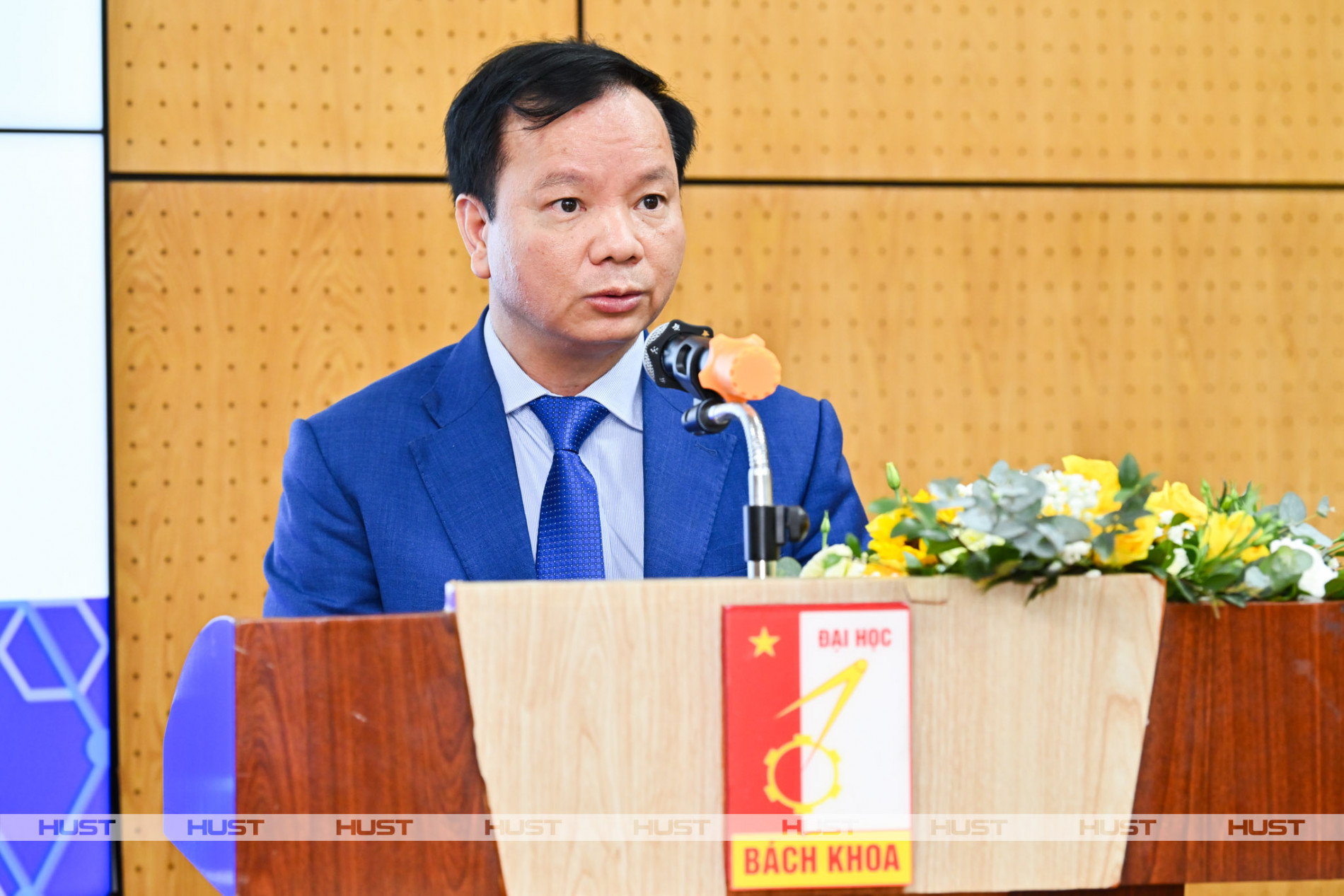
Prof. Vu Van Yem - Vice President of Hanoi University of Science and Technology - delivers the opening speech at the Conference.
Opening the conference, Prof. Vu Van Yem - Vice President of Hanoi University of Science and Technology - emphasized the importance of mastering technology and language capacity in the digital era. According to him, Vietnam faces an urgent requirement for high-quality human resources capable of international integration, mastering technology, and adapting to digital transformation. Resolution No. 57-NQ/TW of the Politburo identified humans as the center, requiring breakthroughs in science and technology associated with human resource training for core technology fields.
Prof. Vu Van Yem affirmed that developing the FL4 program is a practical solution, contributing to creating new momentum for growth and enhancing national competitiveness. The program aims to train bachelors who are proficient in Korean, understand foundational scientific knowledge, and are ready to participate deeply in the global technology value chain. Hanoi University of Science and Technology commits to creating the most favorable conditions for research and teaching activities, building a modern and effective training ecosystem.
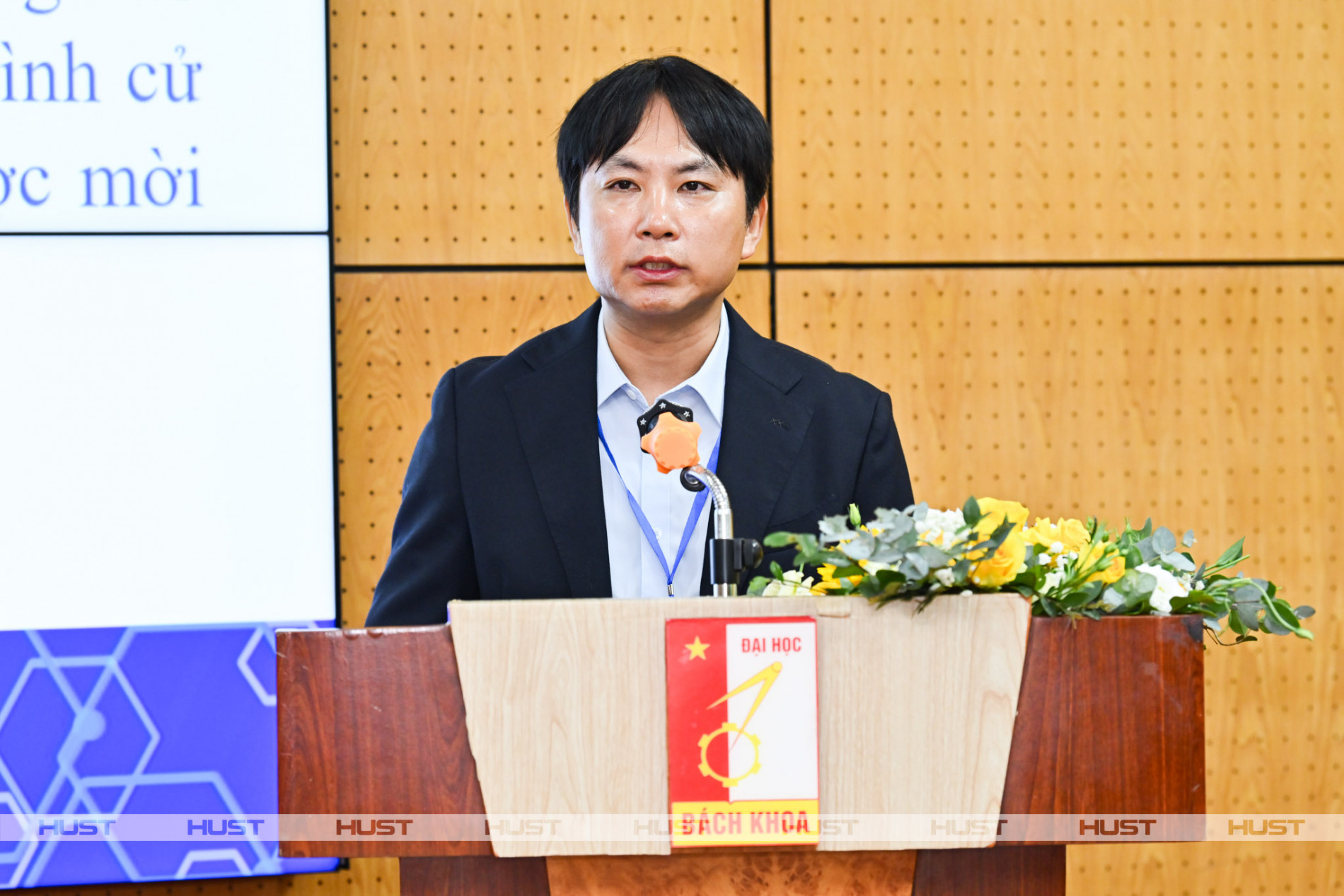
Mr. Lee Eun Kyu - Science, Technology, and ICT Attaché, Embassy of the Republic of Korea in Vietnam - gives a congratulatory speech.
The birth of the FL4 major at HUST received strong support from South Korea. Mr. Lee Eun Kyu - Science, Technology, and ICT Attaché, Embassy of the Republic of Korea in Vietnam - shared that science and technology have become a core pillar in the Comprehensive Strategic Partnership between the two countries. Currently, there are about 12,000 Vietnamese students studying natural sciences and engineering in South Korea.
Mr. Lee Eun Kyu highly appreciated the intelligence and dynamism of Vietnamese students and believed that improving specialized Korean language capacity will expand cooperation opportunities at leading Korean research institutes and enterprises. He expressed his expectation that Hanoi University of Science and Technology will play a central role in the process of bringing Vietnam to break through and become a science and technology powerhouse. The companionship of the Embassy and organizations such as the Korea Foundation and the King Sejong Institute Foundation is a great source of motivation for the upcoming journey of the Korean for Science and Technology (FL4) major.
Breaking the Boundaries of Knowledge and Solving the Human Resource Thirst of Korean Corporations
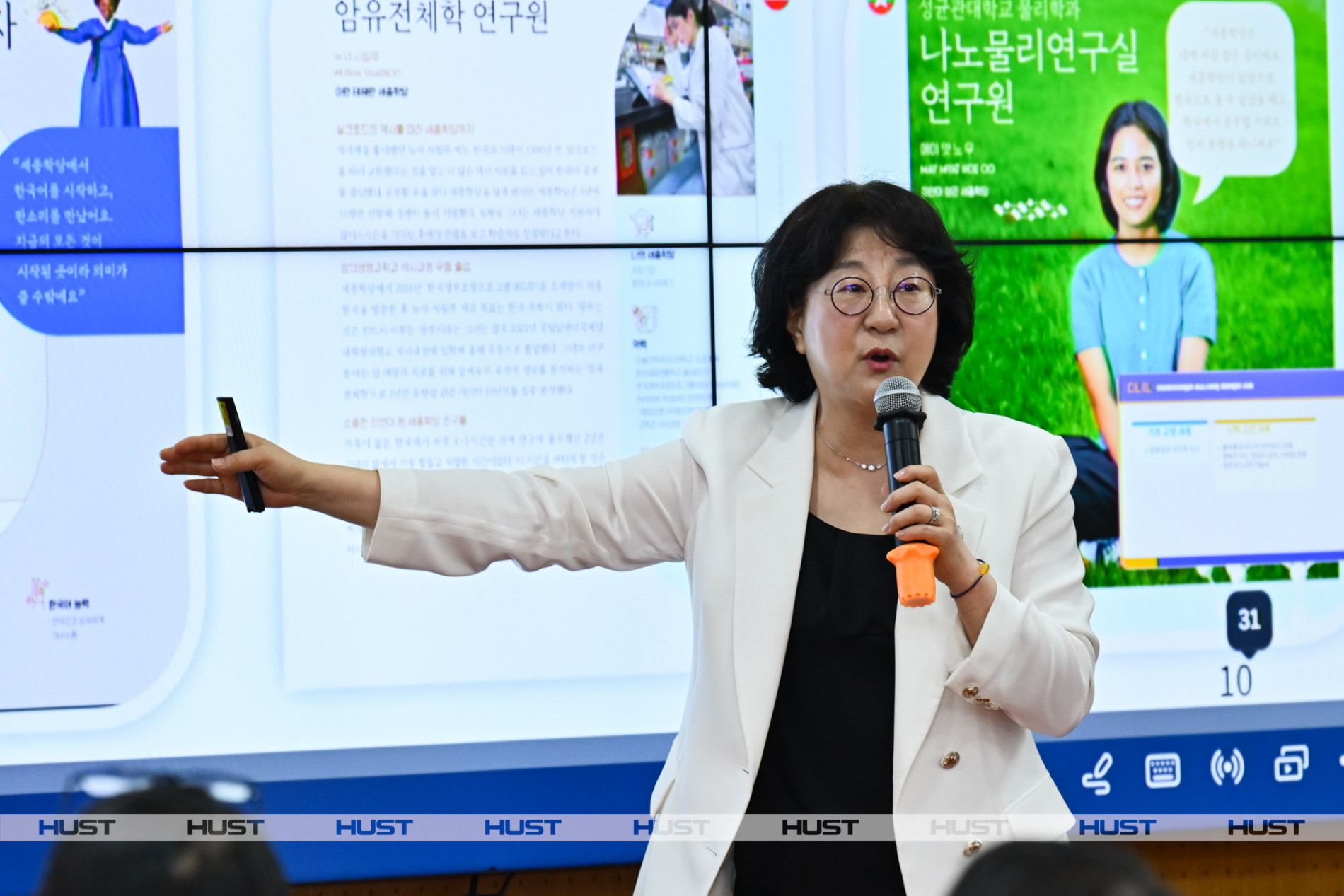
Prof. Lee Haiyoung - Dean of the Hokma College of General Education, Ewha Womans University, Former President of the King Sejong Institute Foundation - brings a completely new educational mindset to the Conference.
In an engaging keynote speech titled "A Paradigm Shift in Korean Language Education: Breaking the Boundaries of Knowledge," Prof. Lee Haiyoung - Dean of the Hokma College of General Education, Ewha Womans University, Former President of the King Sejong Institute Foundation - brought a completely new educational mindset. Surveys show that the majority of students studying Korean today do so for the purpose of intensive study and seeking employment at large technology corporations.
Prof. Lee Haiyoung affirmed that the Korean language is no longer a goal in itself; it has become a tool to capture knowledge in fields such as IT, medicine, and engineering. She proposed the CLIL (Content and Language Integrated Learning) model - integrating the teaching of subject content and foreign languages - as an inevitable trend. Prof. Lee Haiyoung highly appreciated the determination of Hanoi University of Science and Technology and emphasized that to succeed, the University needs to raise the entry level of students and ensure a team of lecturers capable of combining language with specialized knowledge.
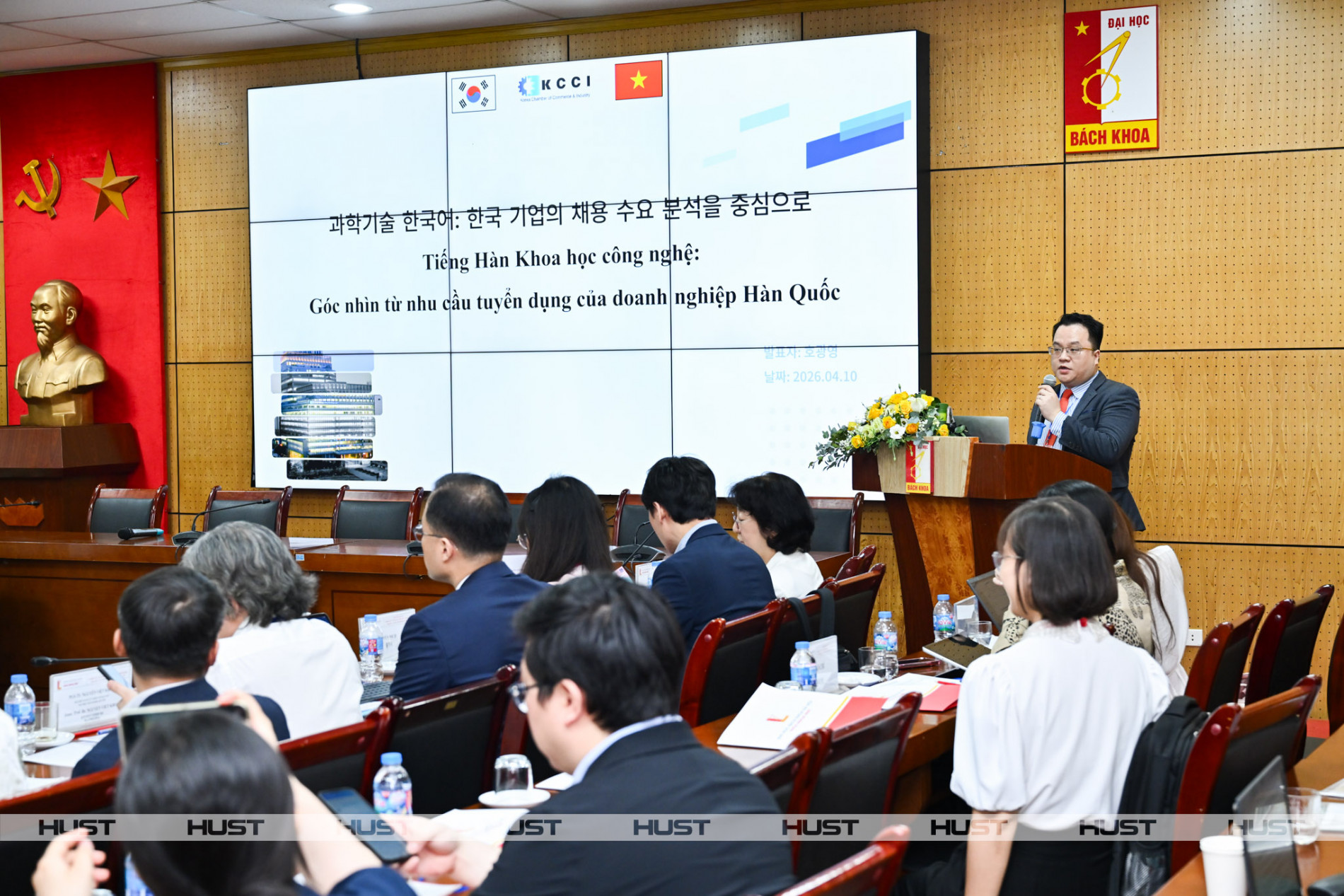
Master Ho Quang Anh - Operations Manager of the Korea Chamber of Commerce and Industry (KCCI) - presents the topic "Korean for Science and Technology: A Perspective from the Recruitment Needs of Korean Enterprises."
Concretizing the needs from the market, Master Ho Quang Anh - Operations Manager of the Korea Chamber of Commerce and Industry (KCCI) - presented the topic "Korean for Science and Technology: A Perspective from the Recruitment Needs of Korean Enterprises." The speaker affirmed: Korean enterprises are in dire need of personnel capable of operating automated assembly lines and reading technical documents and professional reports in Korean. KCCI commits to coordinating with training institutions like Hanoi University of Science and Technology to select and train high-quality technical human resources through programs like the E-7-1 Visa.
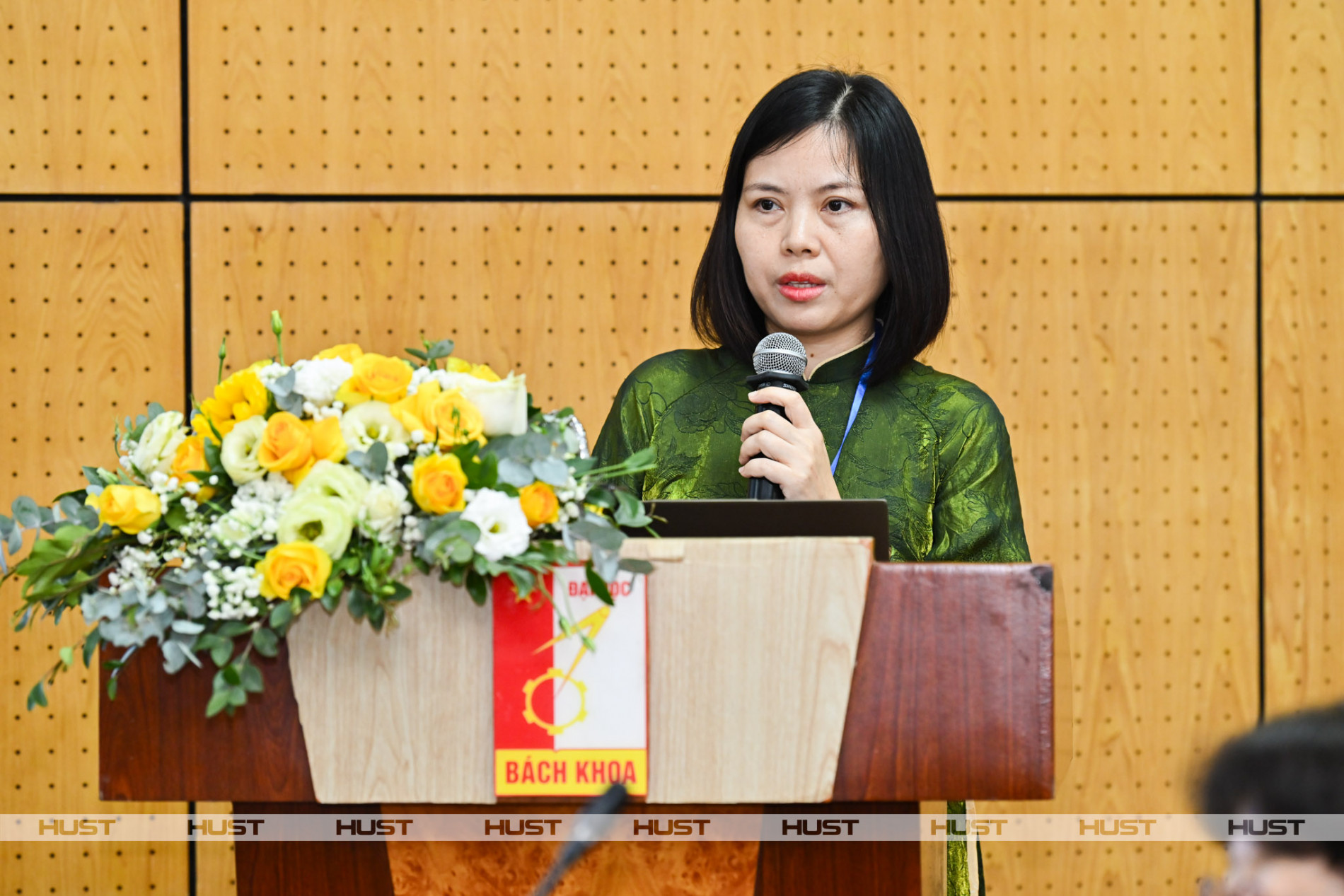
Dr. Tran Thi Thu Phuong - Chairwoman of the FL4 Training Program Development Council - introduces details about the "Korean for Science and Technology Program: Model and Implementation Roadmap."
In response to those expectations, Dr. Tran Thi Thu Phuong - Chairwoman of the FL4 Training Program Development Council - introduced in detail the "Korean for Science and Technology Program: Model and Implementation Roadmap." With a structure of 136 credits, the program inherits the essence of 25 years of experience in training English for Science and Technology (FL1) and the success of the Chinese for Science and Technology (FL3) major. Students are exposed to specialized modules such as Korean for Electrical - Electronic Engineering, Materials Science, Mechanical Engineering, Environment, and Information Technology from their third year.
Dr. Tran Thi Thu Phuong emphasized the philosophy of "Real work, real combat," bringing students down to factories for cognitive visits right from the first year and professional internships at enterprises before graduation.
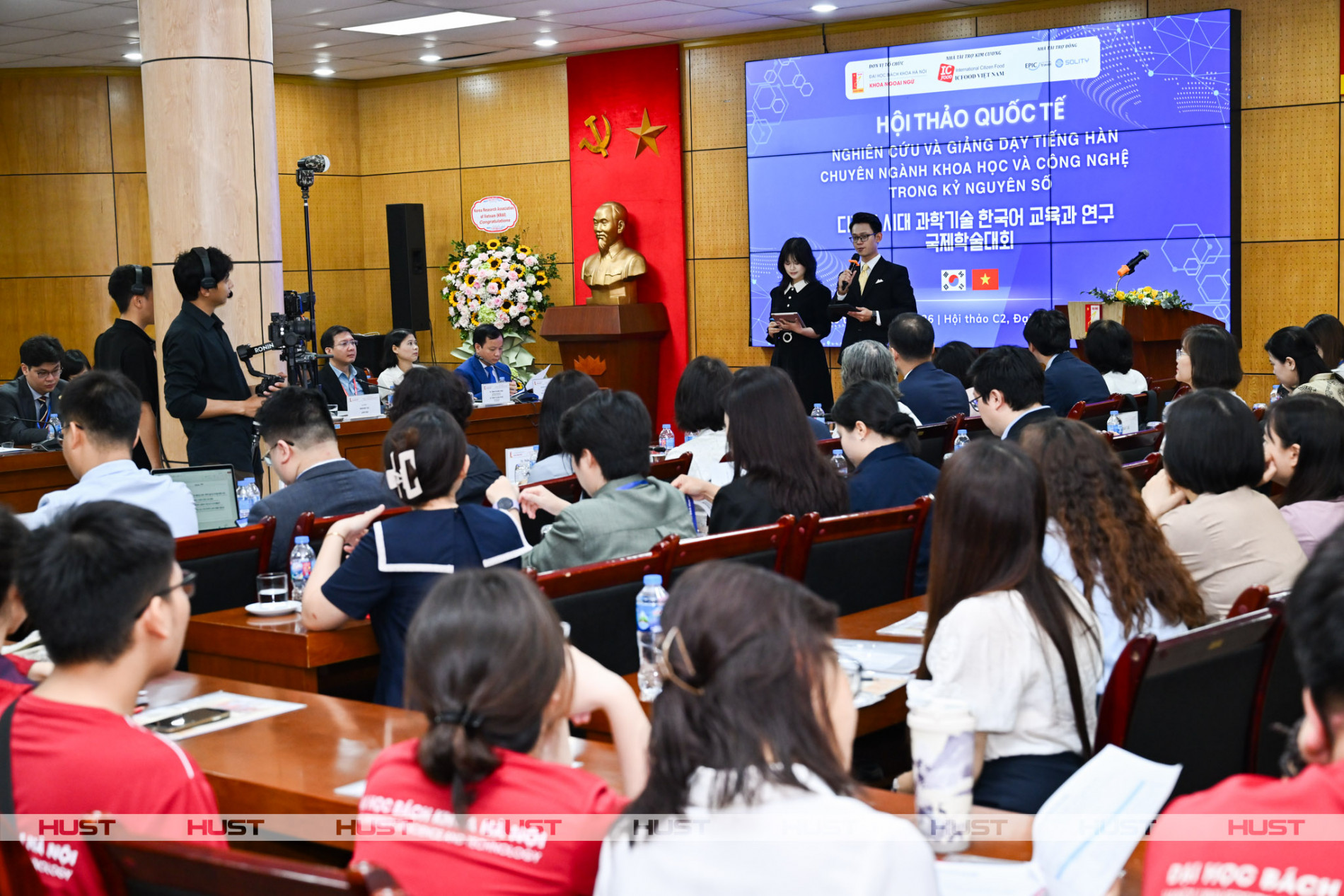
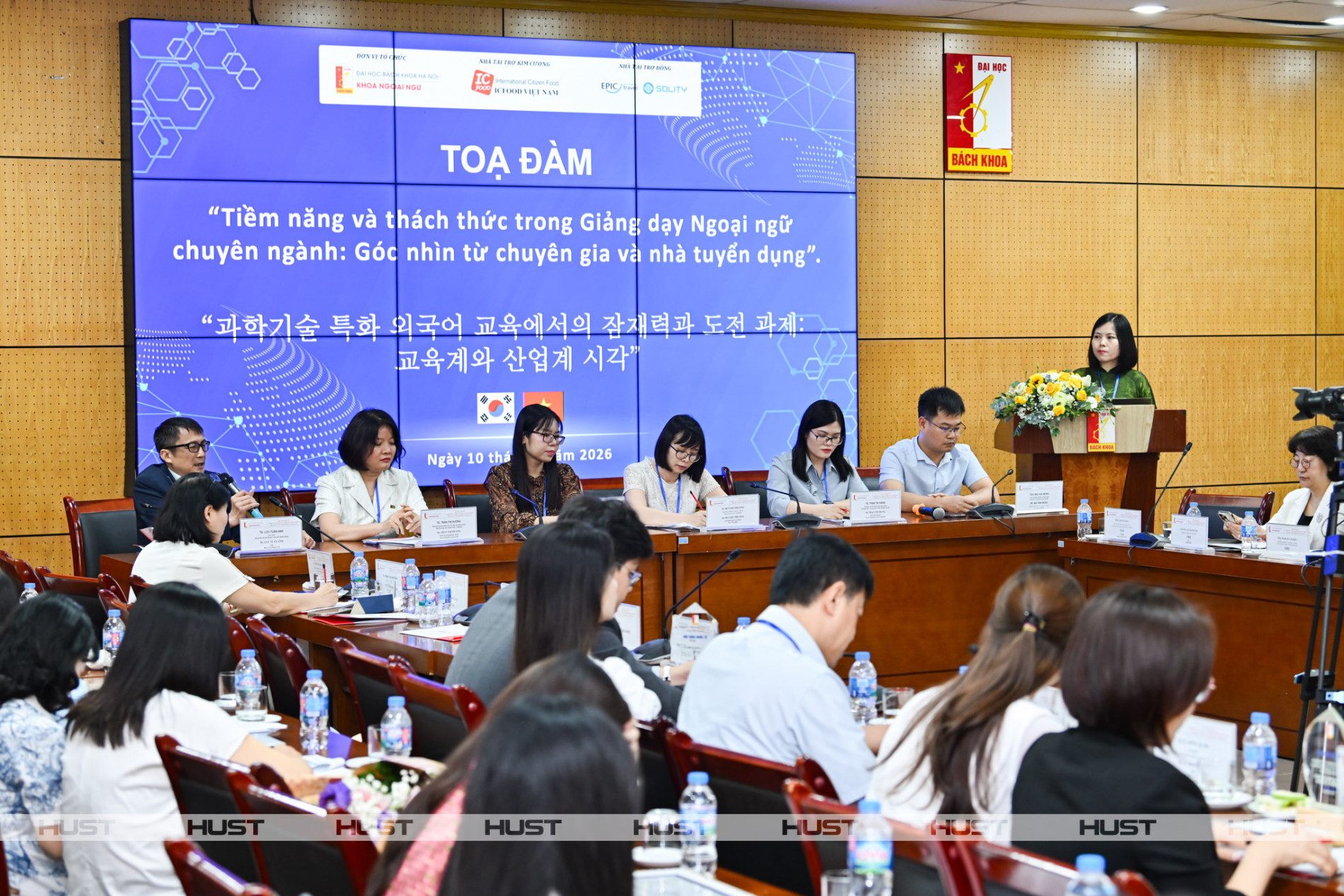
Panoramic view of the Conference.
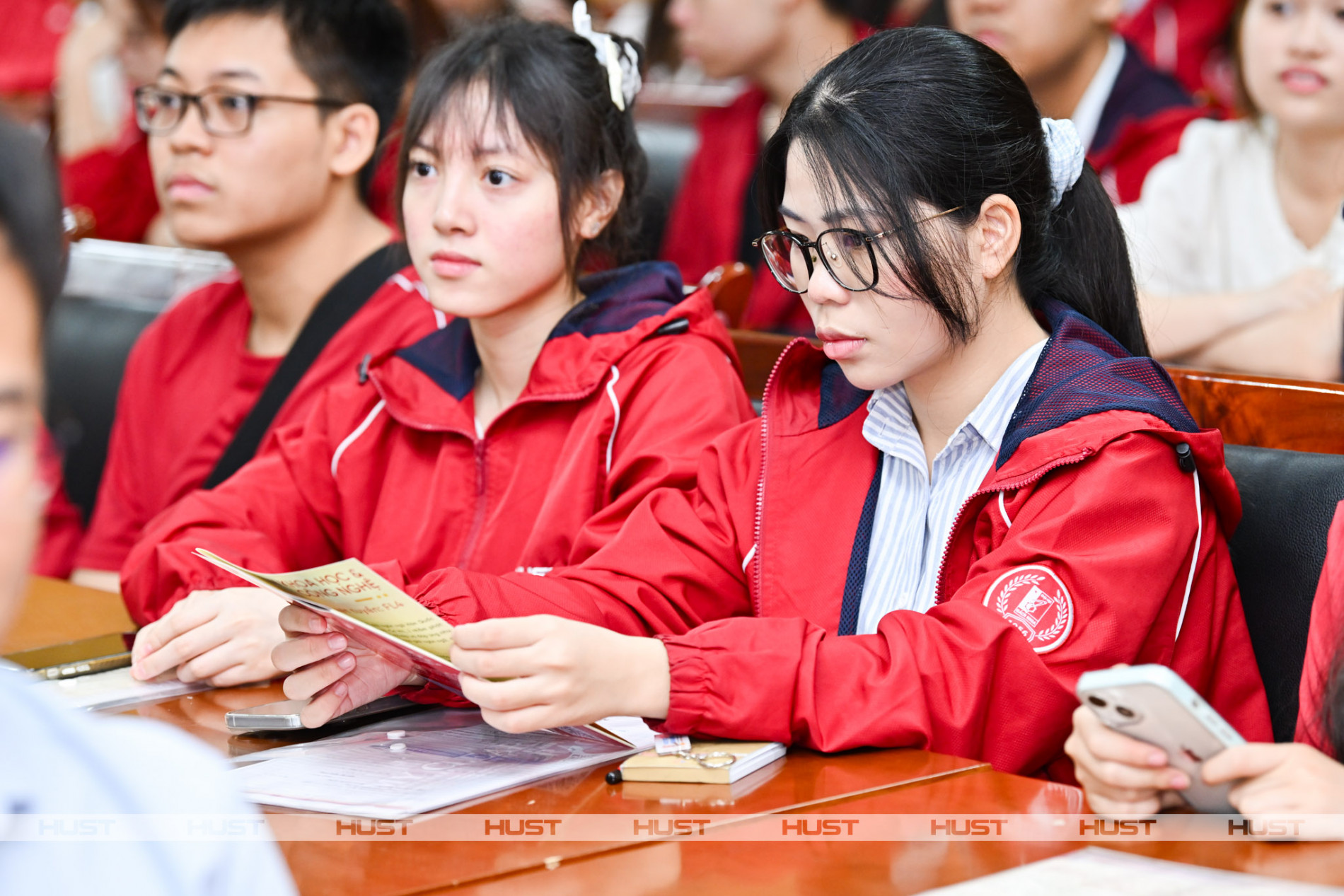
Hanoi University of Science and Technology students attending the Conference.
Korean and Vietnamese experts attending the Conference
"Real Work - Real Combat" Training with Enterprises as "Co-authors"
At the Conference, exchanges on "Potentials and Challenges in Teaching Specialized Foreign Languages: Perspectives from Experts and Employers" brought deep discussions. The discussed opinions outlined a development roadmap for the FL4 major based on receptiveness, learning, and close connection between the University - Enterprise - International Partners to best serve the needs of society.
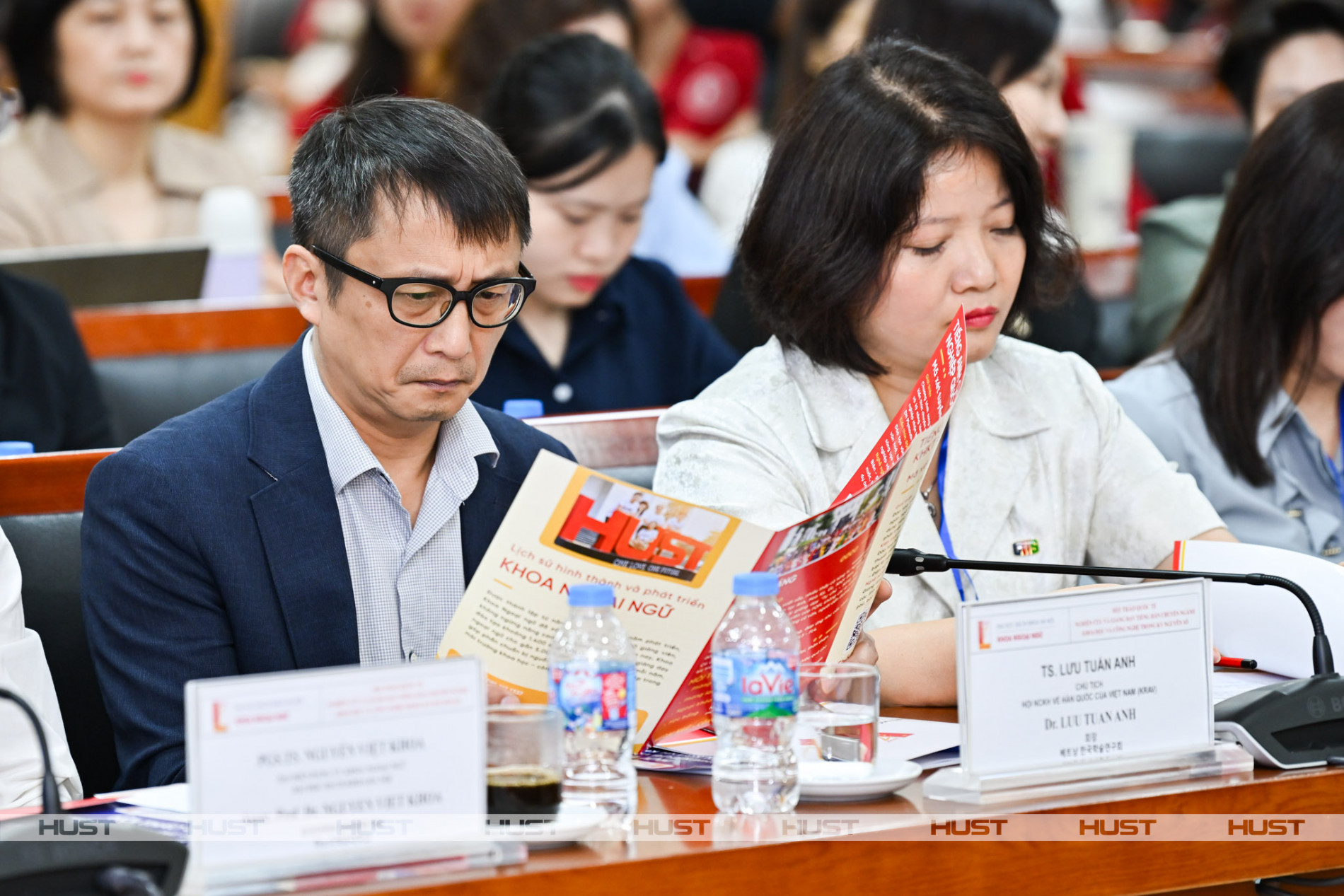
Dr. Luu Tuan Anh - President of the Vietnamese Association of Korean Studies and Dr. Tran Thi Huong - Dean of the Faculty of Korean Language and Culture, University of Languages and International Studies (VNU).
Dr. Luu Tuan Anh - President of the Vietnamese Association of Korean Studies - suggested that the training model needs to be liberal, erasing the boundaries between departments so that students from other engineering faculties can also access the Korean language.
Dr. Tran Thi Huong proposed building a set of Korean language textbooks specifically for the science and technology bloc based on cooperation between universities and enterprises.
Dedicated experts propose breakthrough suggestions and solutions for the Korean for Science and Technology (FL4) major, Hanoi University of Science and Technology
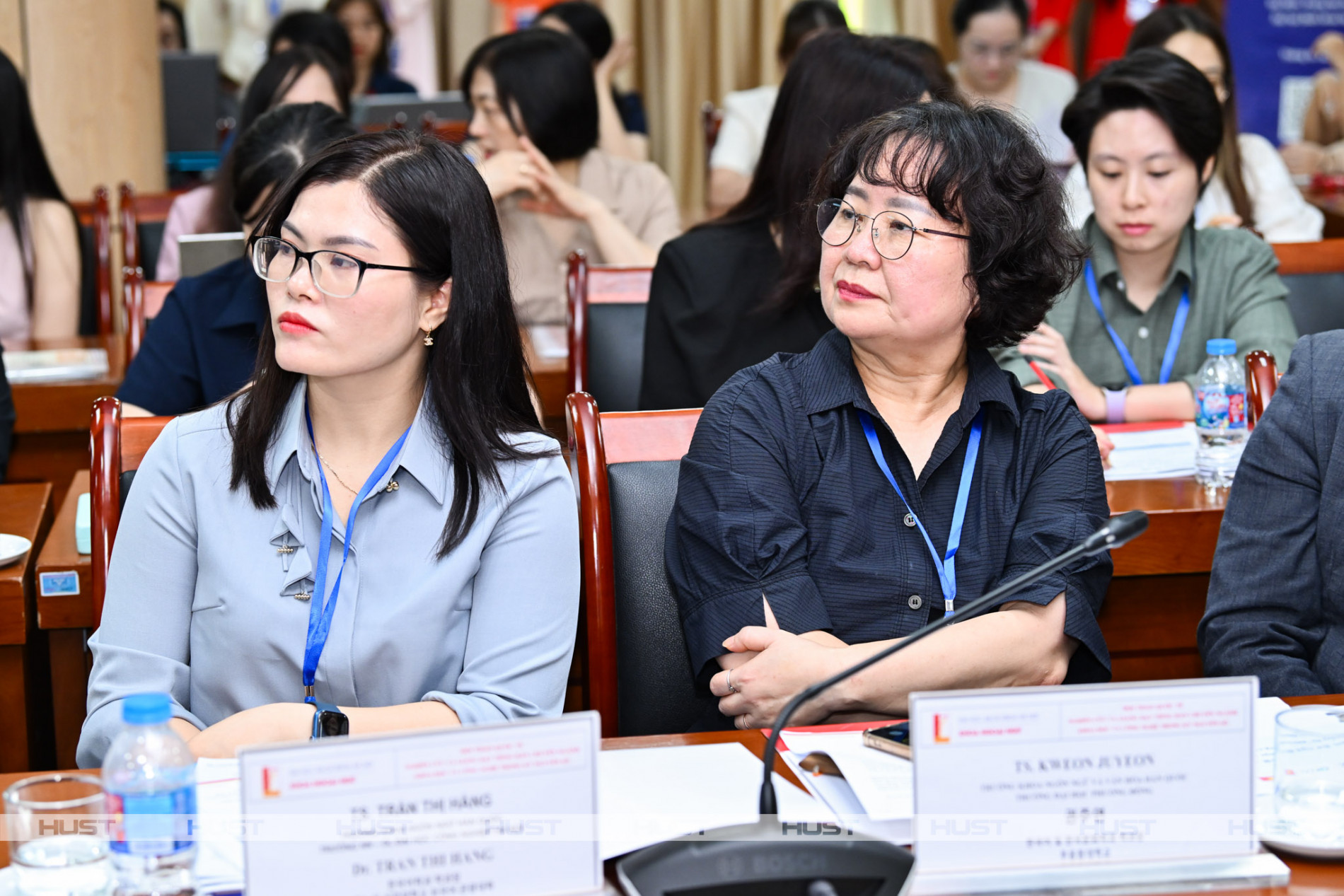
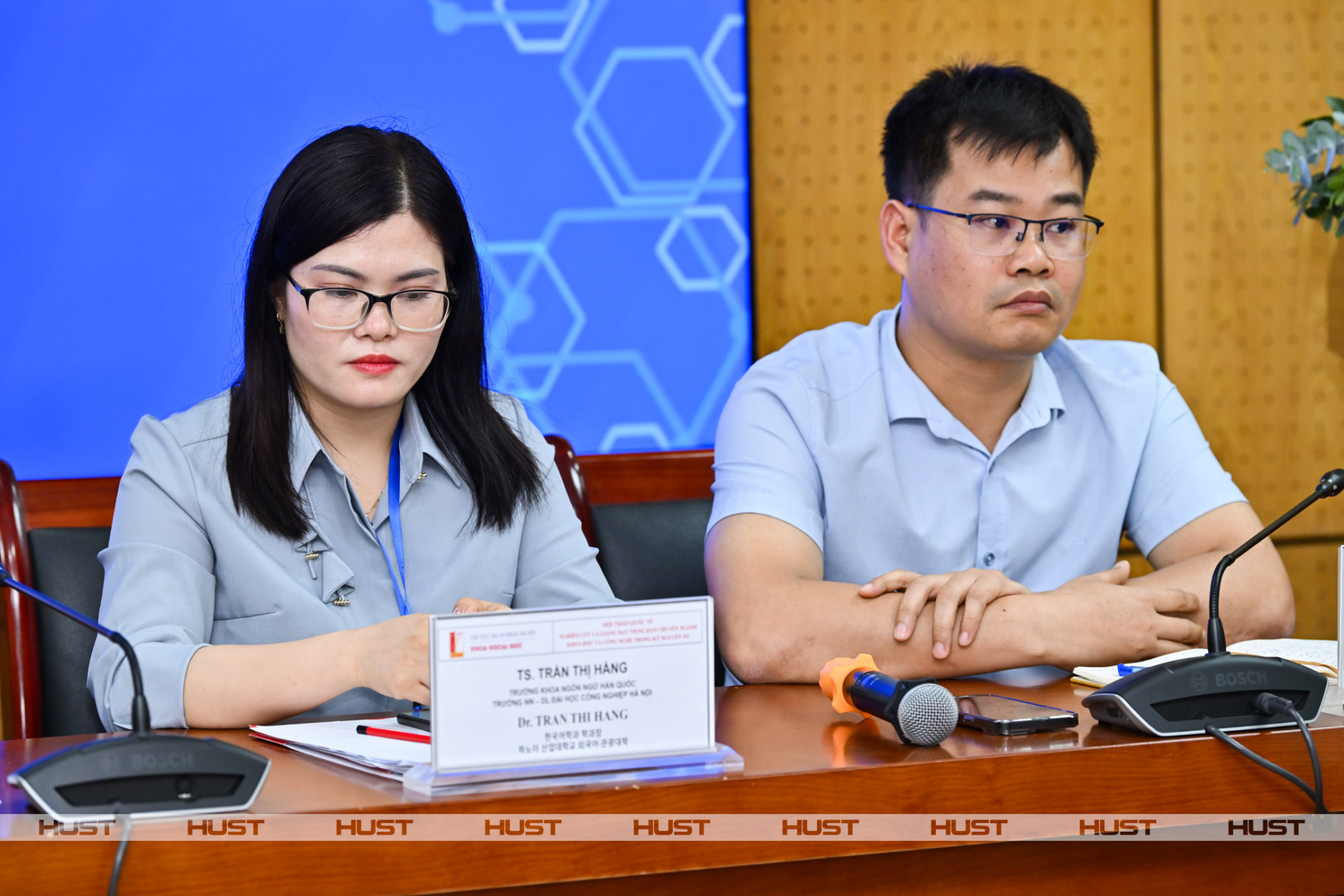
Dr. Tran Thi Hang - Dean of the Faculty of Korean Language, School of Languages - Tourism, Hanoi University of Industry - proposed inviting enterprises to directly participate in building the curriculum and compiling learning materials to stay close to practical needs.
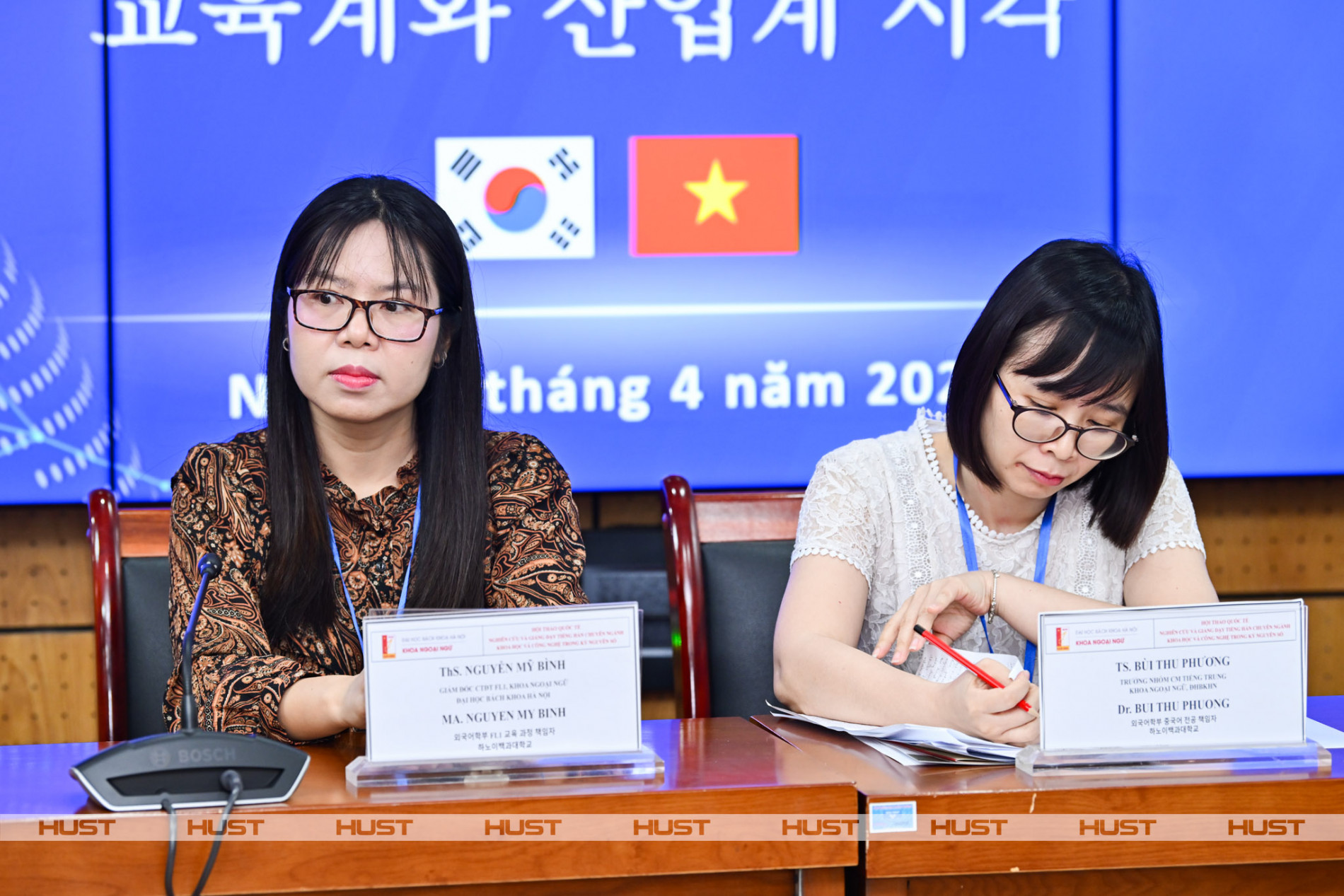
Master Nguyen My Binh and Dr. Bui Thu Phuong - School of Foreign Languages affirmed that AI is not a threat but a support tool. The program of the School of Foreign Languages, Hanoi University of Science and Technology trains students on how to use AI responsibly and effectively in professional activities.
Master Nguyen My Binh and Dr. Bui Thu Phuong - School of Foreign Languages, Hanoi University of Science and Technology
Dr. Tran Thi Hang - Dean of the Faculty of Korean Language, School of Languages - Tourism, Hanoi University of Industry and Mr. Mai Van Mung - Deputy Head of Recruitment, LG Display Hai Phong
Mr. Mai Van Mung - Deputy Head of Recruitment, LG Display Hai Phong - proposed implementing cognitive internships (first year) to help students shape job requirements and professional internships (third, fourth year) to practice technical translation and interpretation skills.
Delivering the concluding remarks for the discussion session, Dr. Trinh Thi Anh Hang - Dean of the School of Foreign Languages, Hanoi University of Science and Technology - expressed her appreciation for the contributed opinions; at the same time, affirming that the School of Foreign Languages has made careful preparations through cooperation with experts from specialized faculties at Hanoi University of Science and Technology.
Prof. Vu Van Yem (far left) - Vice President of HUST and Dr. Trinh Thi Anh Hang (far right) - Dean of the School of Foreign Languages, HUST, present flowers to thank the sponsors.
Dr. Trinh Thi Anh Hang was particularly interested in Dr. Tran Thi Hang's idea of enterprises becoming "co-authors" of the training program; and introduced a model of sending elite students to work at corporations before graduation to minimize retraining time.
Along with that, the School of Foreign Languages will pay special attention to incorporating elements of Korean corporate culture - characterized by speed and a focus on results - into the lectures so that students do not experience "culture shock" when going to work. With the orientation of "real work, real combat," the School of Foreign Languages desires to send the most elite students to intern at corporations like LG Display or Samsung in the form of an "enterprise semester." This helps them quickly access practical requirements, minimizing retraining time at the enterprise.
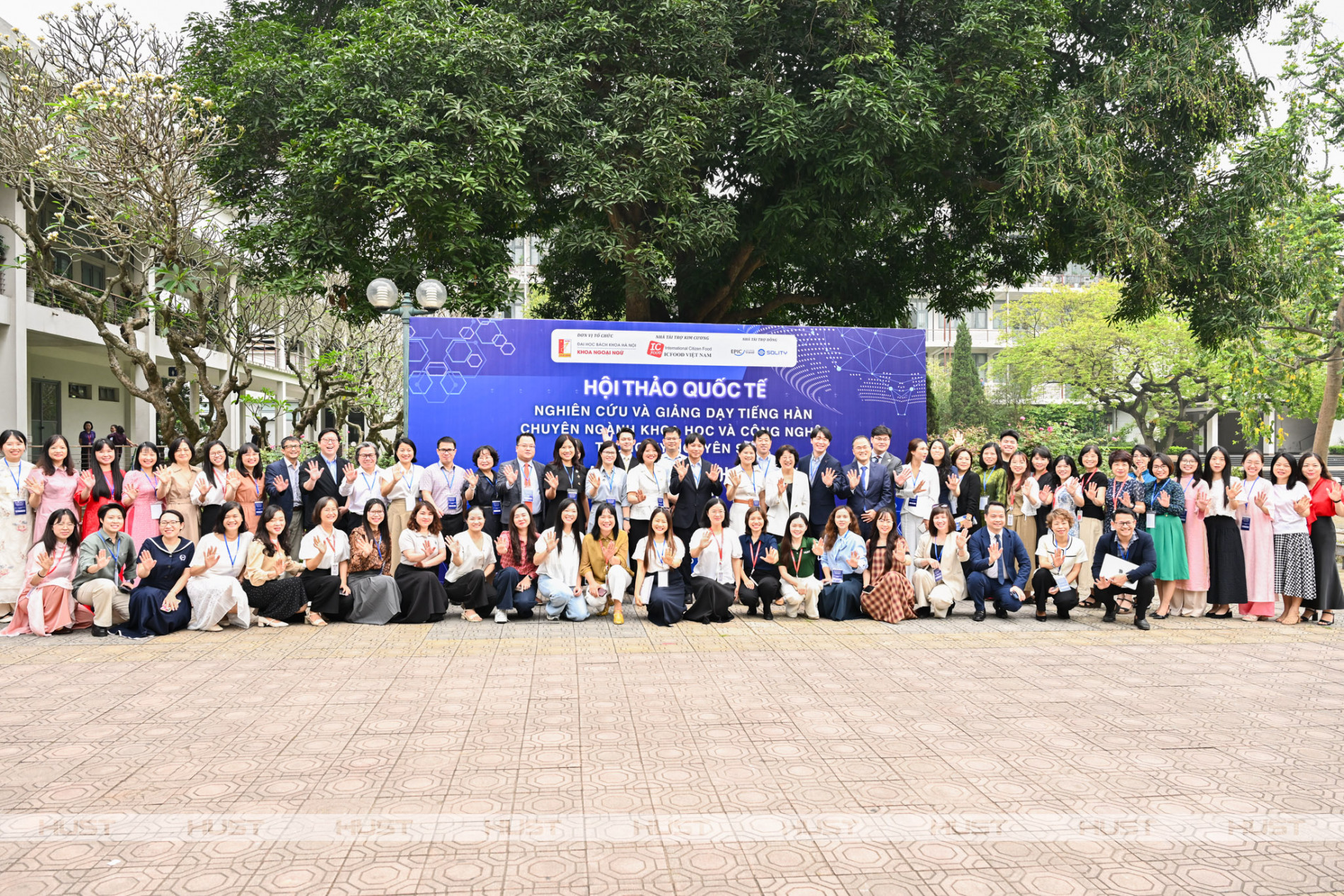
Delegates attending the Conference take commemorative photos
Although the road ahead still has many challenges, with the receptiveness and learning of the teaching staff and the companionship of Korean partners, the Korean for Science and Technology - FL4 major at HUST is trusted by experts and business leaders from Vietnam and South Korea to reap brilliant successes. Each future FL4 student will become a "technology ambassador," actively contributing to the increasingly solid Vietnam-South Korea cooperative relationship.
 Hanoi University of Science and Technology Joins Alliance to...
 The First Internationally Standardized Design Factory Model...
 The Reunion of Over 2,000 Talented Students at Hanoi...
 Hanoi University of Science and Technology Graduates...
 Enterprise's Trust in Hanoi University of Science and...
 20 Petrolimex Scholarships Awarded, 20 Future Aspirations...
 Hanoi University of Science and Technology Moves Up in the...
 Hanoi University of Science and Technology and Samsung...
 Prof. Le Anh Tuan Appointed as HUST President
 HUST and Panasonic Vietnam Collaborate to Develop HVAC Human...