Opportunities to Develop an Artificial Intelligence Society Model for Vietnam
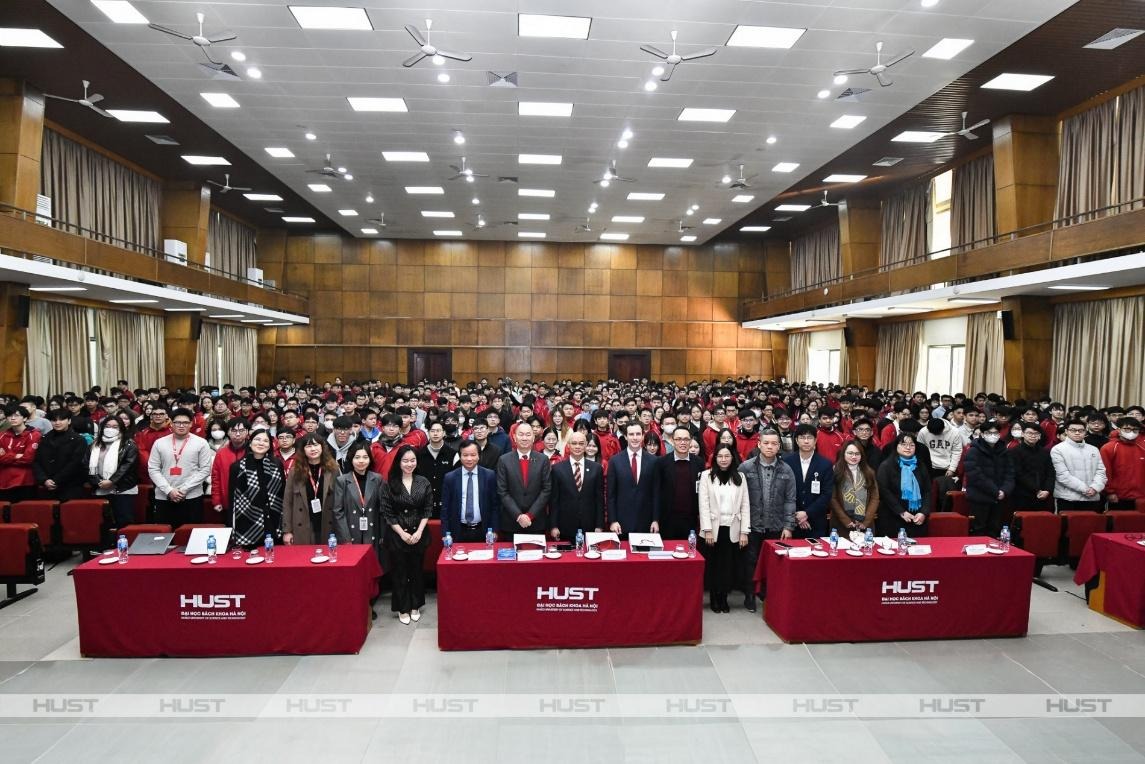
The event aimed to exchange and clarify core societal issues in the Artificial Intelligence (AI) era, ranging from development opportunities and innovation to challenges regarding governance, ethics, and social impact.
The conference gathered many domestic and international experts: Mr. Nguyen Anh Tuan - CEO of the Boston Global Forum (BGF); Dr. Glen Weyl - Founder of the Plurality Institute, PhD in Economics from Princeton University; Mr. Nguyen Song Nam - General Director of VLAB Innovation; along with representatives from organizations and students interested in the field of artificial intelligence.
Humans Must Always Be Placed at the Center in the AI Era
In his opening speech, Prof. Vu Van Yem - Vice President of Hanoi University of Science and Technology, affirmed that the conference carries profound topical and strategic significance, aiming to address the core question: As AI becomes increasingly prevalent, how can we ensure this technology promotes human dignity, accountability, and shared prosperity instead of undermining these values?
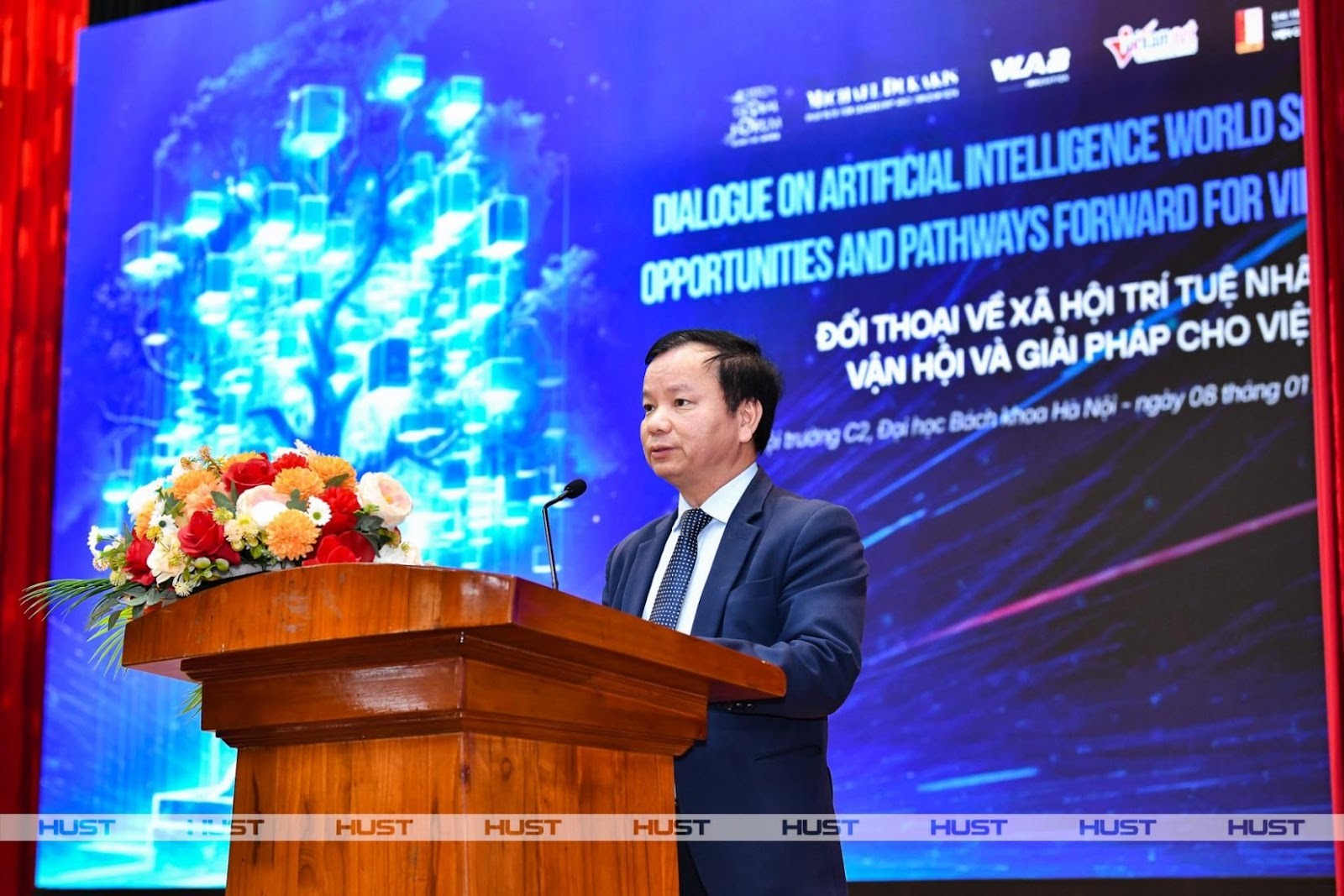
According to Prof. Vu Van Yem, Hanoi University of Science and Technology is implementing three strategic focuses to adapt to the AI era:
First, innovating education from a subject-based transmission model to integrated competency-based training. Data competency and AI competency are defined as new foundational standards, including data interpretation, statistical thinking, responsible AI tool usage, and evidence-based decision-making.
Second, promoting interdisciplinarity, viewing this as an inevitable requirement of the digital economy. The combination of AI with manufacturing, healthcare, finance, logistics, or public administration is seen as a driving force for practical impact.
Third, orienting Hanoi University of Science and Technology to become a product-centric university. Forms of learning through projects, workshops, laboratories, and incubation and technology transfer mechanisms are promoted to bring research results into testing and commercialization.
Prof. Yem affirmed the core principle: "Artificial intelligence can support the decision-making process, but human responsibility must always be placed at the center."
International Expert Perspectives on the AI Society Model
At the presentation session, Mr. Nguyen Anh Tuan - CEO of the Boston Global Forum, shared a presentation titled "Artificial Intelligence Society and Opportunities for Vietnam".
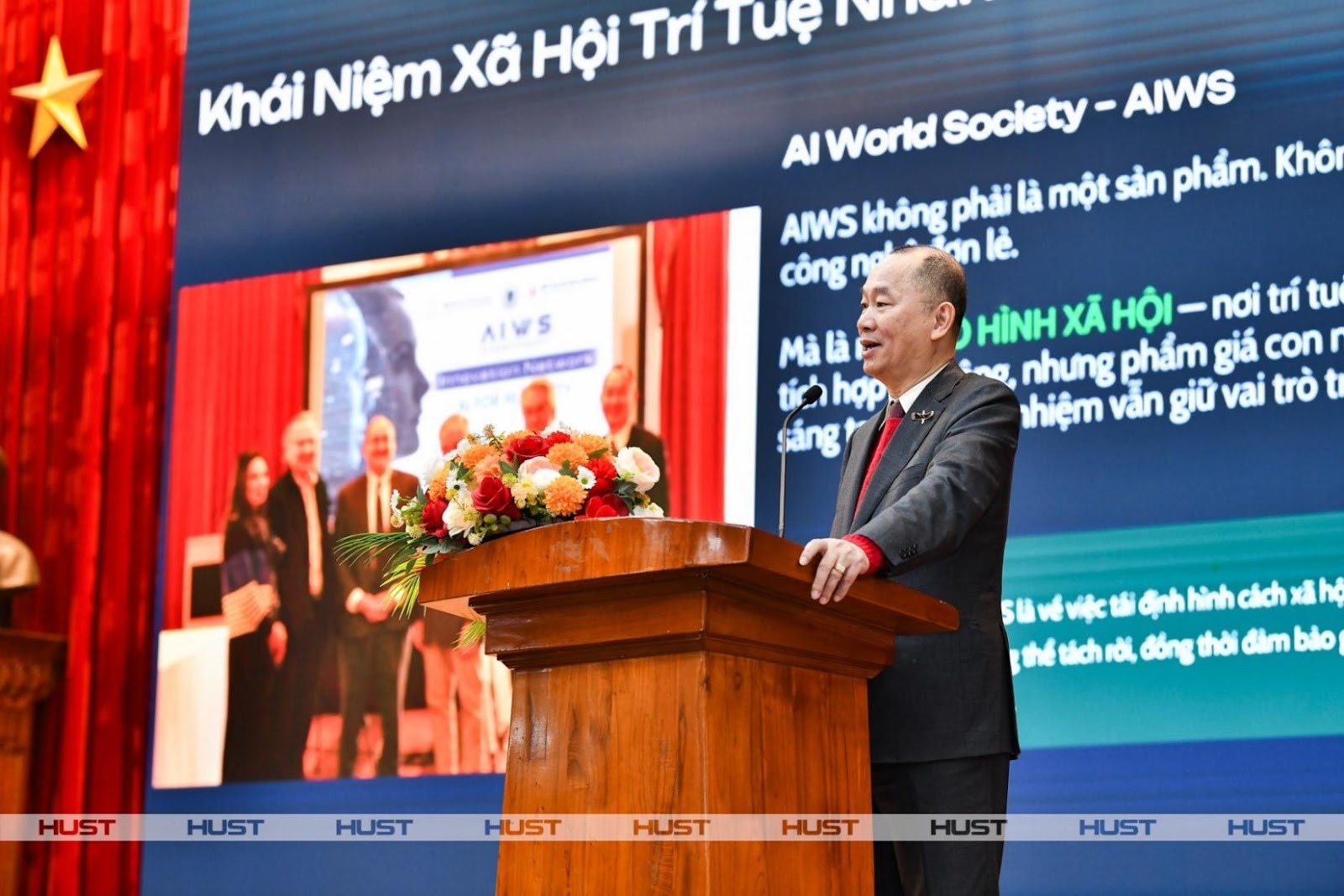
He also shared his personal story about his journey with technology, as well as his concern that Vietnam should not just follow and learn but aim for creativity and creating products that impact the world. According to Mr. Nguyen Anh Tuan, Vietnam can realize new ideas about the AI society model when higher education institutions, notably Hanoi University of Science and Technology, pioneer transforming ideology into practice.
Next, Dr. Glen Weyl - Founder of the Plurality Institute, PhD from Princeton University, presented the Plurality model (Collaborative Pluralism), focusing on using technology to enhance social cooperation and protect human values.

Dr. Glen Weyl emphasized the principle of "data and dignity," stating that data needs to bring opportunities, income, and value to the contributors themselves, while the AI model must align with diverse social communities instead of creating isolation or technological dependence.
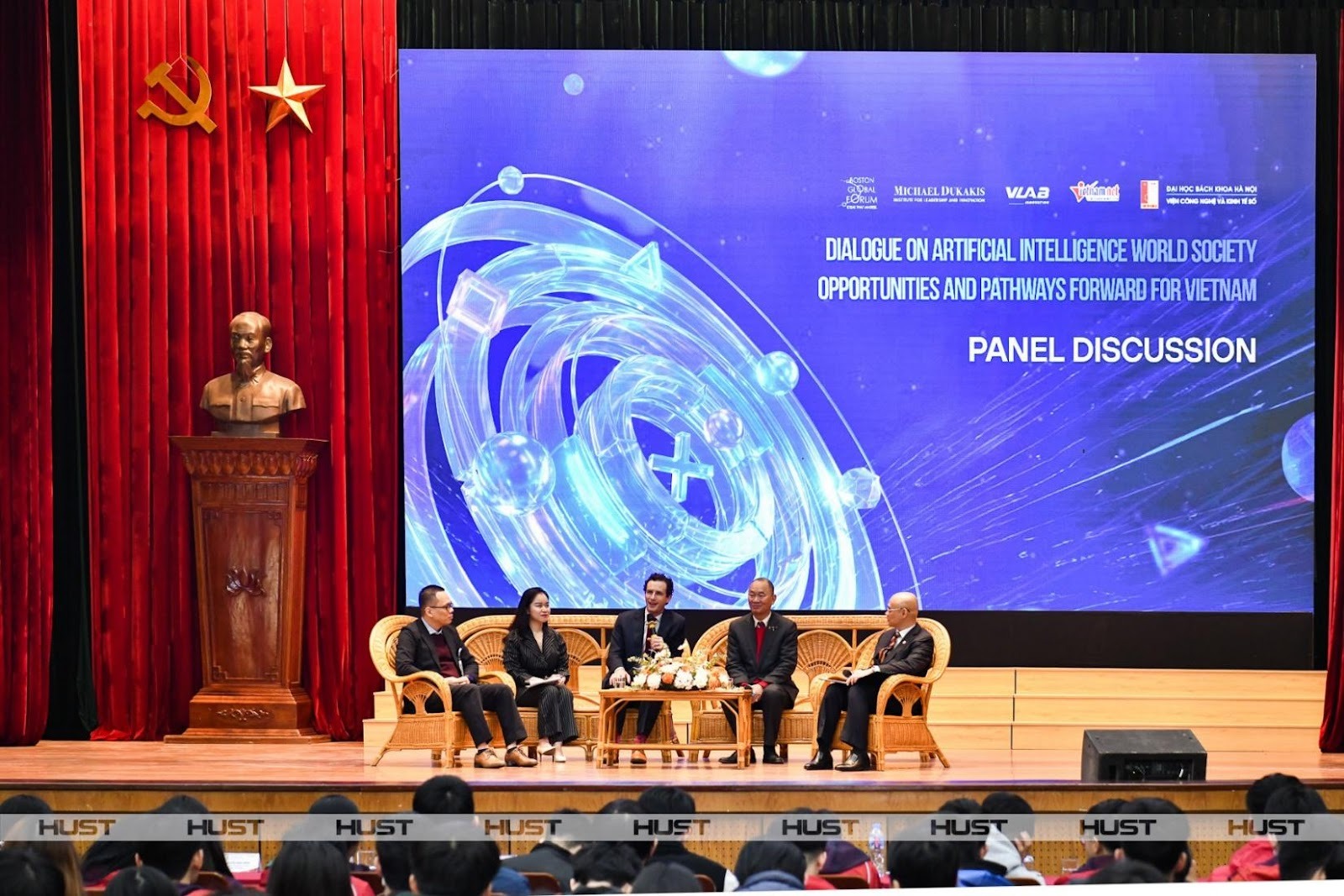
After the presentations, a panel discussion took place with the participation of speakers and guests: Mr. Nguyen Anh Tuan, Dr. Glen Weyl, Mr. Nguyen Song Nam, and Assoc. Prof. Nguyen Binh Minh – Director of the Institute of Digital Technology and Economics, Hanoi University of Science and Technology. The discussion revolved around topics such as: The core of cooperation between humans and technology, standards in an AI society, data access issues, or the role of the young Vietnamese generation in the new technological era.
Photos: Minh Duong
Author: Nguyễn Thu Huệ
Newer articles
Older articles
-
 Behind the AI Algorithms Optimizing Life-Saving Irradiation...
-
 A 30-Country Arena, a HUSTer, and the Story of Classrooms...
-
 The “Family Tradition” of HUST
-
 AI DAY 2026: Hanoi University of Science and Technology...
-
 Hanoi University of Science and Technology and The Asia...
-
 Entrepreneurship for Healing
-
 HUST Research Applies Artificial Intelligence to Medical...
-
 From the Lecture Hall to HiCamping: Study Hard, Live Fully...
-
 Hanoi University of Science and Technology Strives to...
-
 Tripartite Cooperation Integrating Training, Research, and...